

Benefits of Synbiotics for Women: The Doctor’s Guide to a Balanced Biome in 2026
Most of the probiotics you've been swallowing for years never actually make it past your stomach acid alive. They are essentially biological ghosts by the time they reach your gut. It's incredibly frustrating to spend money on supplements while still struggling with persistent bloating and hormonal skin flares. You aren't alone in feeling like your routine is failing you. The truth is that standard capsules often lack the fuel needed for survival. This is where the benefits of synbiotics for women change the game. By pairing specific probiotic strains with targeted prebiotics, we create a strategic team designed to survive the harsh trek to your gut and manage the female estrobolome effectively.
In this guide, I'll explain how this synergy transforms your internal environment from the inside out. We'll explore the science of the gut-vaginal axis and how it dictates everything from your mood to your vaginal pH balance. You'll discover practical ways to achieve consistent digestive comfort and a resilient microbiome. By the end of this article, you'll have a clear, doctor-backed roadmap to use synbiotics for clearer skin and hormonal harmony in 2026. We're moving past vague wellness promises into a new era of clinical viability and biological success.
Key Takeaways
- Discover how the benefits of synbiotics for women stem from a "power couple" effect, where prebiotics provide the essential fuel that probiotics need to colonize your gut effectively.
- Learn about the estrobolome, a specialized collection of gut bacteria that regulates oestrogen to help you manage PMS symptoms and hormonal skin flares.
- Understand why high CFU counts are often a misleading marketing tactic and how to identify delivery systems that protect live cultures during their two-hour journey through stomach acid.
- Explore the gut-vaginal axis to see how targeted microbial strains can stabilize your vaginal pH while simultaneously eliminating chronic digestive bloating.
- Master a practical daily protocol, including the optimal timing for your supplements and the specific hydration habits that support new bacterial growth.
Beyond Probiotics: What Are Synbiotics and Why Do They Matter for Women?
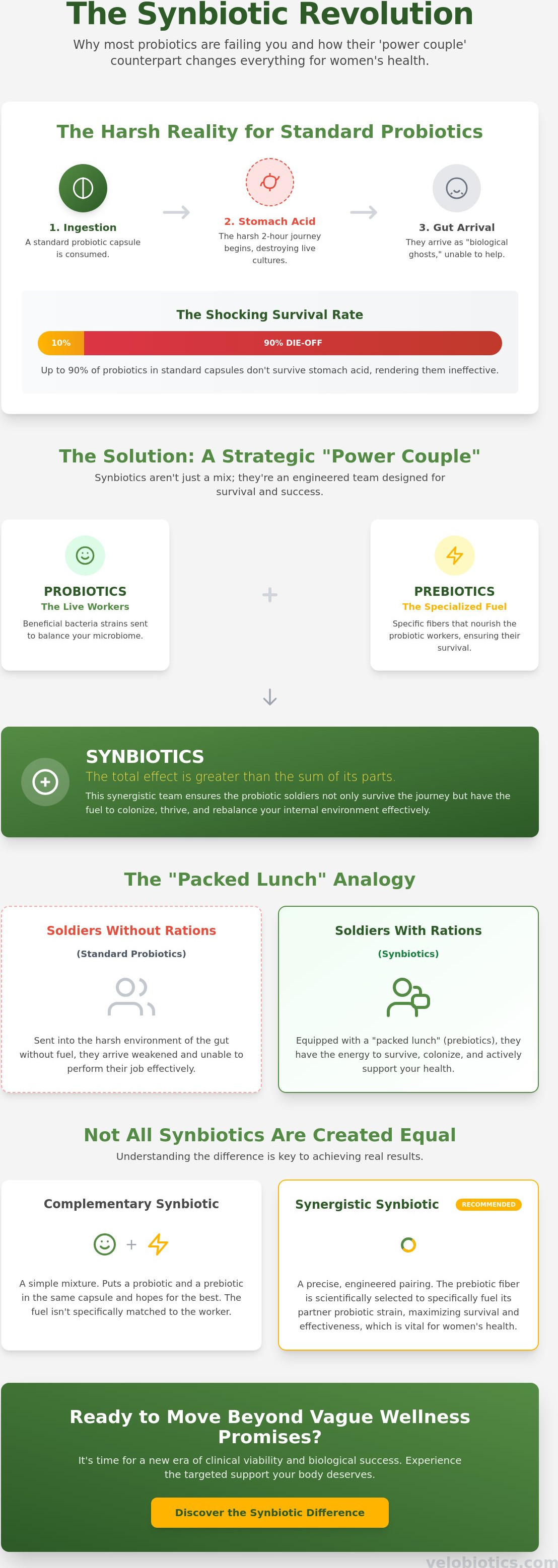
Most people understand probiotics as "good bacteria," but that is only half of the biological story. Synbiotics represent the next evolution in microbial science. They aren't just a random mixture of ingredients; they are a carefully engineered "Power Couple" consisting of probiotics (the live workers) and prebiotics (the specialized fuel). While probiotics introduce beneficial strains into your system, they often arrive in a weakened state. One of the primary benefits of synbiotics for women is that the prebiotic component provides the specific nourishment these bacteria need to colonize and thrive. This ensures the supplement actually translates into a biological change rather than just passing through your system as waste.
To understand what are synbiotics more deeply, we have to look at the concept of synergy. In a clinical setting, synergy means the total effect is greater than the sum of its parts. For the female body, which manages complex hormonal shifts every month, this efficiency is non-negotiable. Standard probiotics often fail because they're "naked" when they hit your stomach acid. Synbiotics solve this by creating a protective, nourishing environment from the moment of ingestion. The workers can focus on balancing your pH and digestion because the fuel is already present. This is why the 2026 trend in nutraceuticals is moving away from basic probiotics toward these more complex, survival-focused formulations.
To better understand this concept, watch this helpful video:
The "Packed Lunch" Analogy for Gut Health
Think of probiotics as soldiers being sent into a difficult environment. Your stomach acid is a harsh barrier that can destroy up to 90% of standard cultures before they reach the lower intestine. If you send these soldiers into battle without rations, they won't survive long enough to do their job. Prebiotics are those rations. For women, fluctuating oestrogen levels can alter the gut environment, making it even harder for "good" bacteria to take hold. This makes the "packed lunch" even more critical. Without the right fuel, your microbiome can't keep up with the demands of your endocrine system, leading to the bloating and fatigue many of my patients describe as a monthly struggle.
Complementary vs. Synergistic Synbiotics
There's a major difference between a complementary synbiotic and a synergistic one. A complementary product just puts two ingredients in a capsule and hopes they help. A synergistic synbiotic, however, uses specific prebiotic fibers designed to feed specific probiotic strains. This level of precision is vital for maintaining the female "multi-biome," which includes both the gut and the vaginal tract. Using products like Femina™ Probiotic Capsules helps ensure that the strains intended for vaginal health actually have the energy to migrate and colonize where they are needed most. This targeted approach is one of the most significant benefits of synbiotics for women who deal with recurring imbalances, as it addresses the survival gap that traditional supplements ignore.
The Hormonal Connection: How Synbiotics Support the Female Endocrine System
The estrobolome is the primary regulator of circulating oestrogen levels. Think of your gut as a metabolic filter that determines how much hormone stays in your system and how much is discarded. When your microbiome is balanced, specific bacteria produce an enzyme called beta-glucuronidase. This enzyme helps break down oestrogen so your body can safely excrete it. However, when your microbial environment is out of sync, this process stalls. Instead of leaving the body, oestrogen gets reabsorbed into the bloodstream. This leads to oestrogen dominance, which is often the primary culprit behind heavy periods, breast tenderness, and those frustrating cystic breakouts along the jawline.
One of the most overlooked benefits of synbiotics for women is their ability to restore this "hormonal clearance" pathway. By providing the specific prebiotic fibers that feed oestrogen-metabolizing bacteria, synbiotics ensure the system doesn't get backed up. This is a far more sophisticated approach than just taking a generic probiotic. Research into Probiotics and Women's Health shows that maintaining this microbial diversity is essential for preventing hormonal imbalances that affect your daily quality of life. When your gut is healthy, it acts as a secret control center for clear skin and stable moods.
Synbiotics and the PCOS Struggle
Polycystic Ovary Syndrome (PCOS) is frequently treated as a purely reproductive issue, but it's deeply rooted in your metabolic health. There is a direct, scientific link between gut dysbiosis, insulin resistance, and elevated androgen levels. When the gut is inflamed, insulin levels spike, which triggers the ovaries to produce more testosterone. Synbiotics help break this cycle by:
- Improving insulin sensitivity to help manage blood sugar levels.
- Reducing systemic inflammation that triggers hormonal chaos.
- Supporting the metabolic breakdown of excess androgens.
The Gut-Brain-Mood Axis
Your mood isn't just "in your head"; it's largely in your gut. Science tells us that roughly 90% of your body's serotonin is produced by gut bacteria. During the luteal phase, when progesterone and oestrogen levels shift rapidly, your gut's ability to produce these "feel-good" neurotransmitters becomes your primary defense against PMS-related anxiety or irritability. Synbiotics help stabilize this production by ensuring the bacteria responsible for serotonin synthesis have a steady supply of fuel. This creates a more resilient emotional baseline throughout your entire cycle. If you're looking for a way to support your body's natural rhythms, exploring the science of delivery systems can help you find a solution that actually reaches these vital gut centers.
Survival of the Fittest: Why Most Probiotics Die Before They Help You
I often see patients who are frustrated because they’ve been diligently taking "high-potency" supplements with no change in their bloating or skin health. The medical reality is that your stomach is a hostile environment. It is filled with hydrochloric acid designed specifically to break down food and neutralize bacteria. Most standard probiotics are "naked" when they enter this environment. During the two-hour trek from your mouth to your lower intestine, up to 90% of these beneficial bacteria can be destroyed. If the bacteria are dead by the time they reach their destination, they cannot colonize your gut or provide any therapeutic value.
This is why "billions of CFUs" (Colony Forming Units) on a label is often a misleading marketing tactic. A supplement could claim 100 billion CFUs, but if only 1 billion survive the stomach acid barrier, the clinical efficacy is severely compromised. From a doctor’s perspective, biological viability is far more important than raw numbers. One of the primary benefits of synbiotics for women is that they create a protective matrix. By wrapping the probiotics in a prebiotic "blanket," we give them a much higher chance of survival. This ensures that the active ingredients actually reach the areas where they can manage your hormones and digestion effectively.
Micro-encapsulation: The High-Tech Shield
To solve the survival problem, we utilize sophisticated technology called micro-encapsulation. This acts as a high-tech shield, allowing the bacteria to bypass the stomach unscathed. It's a common misconception that "shelf-stable" probiotics are also "stomach-stable." While a pill might survive on your counter for months, it can still dissolve within minutes of hitting your digestive juices. Micro-encapsulation ensures the release of the bacteria is delayed until they reach the alkaline environment of the small intestine. For a deeper look at the mechanics of this process, you can read about Probiotics That Survive Stomach Acid and why delivery systems are the true secret to results.
The Importance of Strain Specificity
Not all bacteria are created equal, especially when addressing the female biome. Strains like Lactobacillus rhamnosus and Lactobacillus reuteri are the "VIPs" for women because of their unique ability to migrate to the vaginal tract and maintain a healthy pH. When these are paired with prebiotics like inulin or FOS (fructooligosaccharides), they have an immediate "starter kit" for growth. Clinical reviews, such as the systematic study on Synbiotics and Hormonal Imbalance in PCOS, demonstrate that these specific combinations are what actually drive results in complex conditions. Formulations like Velo16 Probiotic Digestive Capsules utilize this strain-specific approach to provide maximum coverage for both gut and hormonal health.
4 Targeted Benefits of Synbiotics Every Woman Should Know
Understanding the benefits of synbiotics for women requires looking past the gut alone. While many supplements focus on simple digestion, a truly synergistic formula addresses the specific physiological needs of the female body. By combining the right bacterial strains with their ideal fuel sources, we can achieve outcomes that standard probiotics simply can't reach. These benefits impact your daily comfort, your appearance, and your long-term resilience against common infections.
- Enhanced Vaginal Flora: Synbiotics help stop the "see-saw" effect where women bounce between bacterial vaginosis (BV) and yeast infections. They do this by stabilizing the acidic environment necessary to keep opportunistic pathogens at bay.
- Bloat-Free Digestion: Many women struggle with gas when eating high-fiber foods. Synbiotics provide the specific enzymes needed to break down complex carbohydrates before they ferment and cause painful distension.
- Metabolic Support: A balanced microbiome improves how your body manages blood sugar. This helps reduce the "sugar crashes" that lead to cravings and weight fluctuations throughout your cycle.
- Immune Resilience: Since roughly 70% of your immune system is located in your gut, synbiotics act as a training ground for your white blood cells. This strengthens your first line of defense against seasonal illnesses.
Vaginal Health and the pH Balance
There is a biological highway between your gut and your vaginal tract. Beneficial bacteria actually migrate from the digestive system to colonize the vagina, but they can only make this journey if they are healthy and well-fed. When you take oral synbiotics, you're supporting that "Cookie Fresh" feeling from the inside out by ensuring a steady supply of Lactobacillus. This is particularly vital after a course of antibiotics or during hormonal shifts that naturally raise your pH. For targeted intimate support, I recommend using Femina™ Probiotic Capsules, which are designed specifically to survive the transit and reach the vaginal biome.
Radiant Skin from Within
The "Gut-Skin Axis" is a scientific reality that explains why your face often reacts to what’s happening in your stomach. Adult acne and eczema are frequently outward signs of systemic inflammation. When synbiotics strengthen the gut lining, they prevent inflammatory markers from leaking into the bloodstream and triggering skin flares. If you want to see a true "glow," you have to be patient. My practical advice is to stay consistent for at least 30 days. It takes that long for your microbial colonies to stabilize and for your skin cells to turn over. If you're ready to stabilize your internal environment, you can explore our full range of doctor-formulated synbiotics to find your perfect match.
Implementing a Synbiotic Routine: The Doctor’s Practical Protocol
Starting a new health regimen can feel overwhelming, but the true benefits of synbiotics for women only materialize through consistency and proper timing. We've discussed the science of survival and the hormonal connection; now we need to bridge the gap to your daily life. To get the most out of your supplement, you have to treat your gut like a garden. You wouldn't just throw seeds on dry soil and walk away. You have to prepare the environment and provide ongoing nourishment for those "good" bacteria to take root and flourish.
Timing is a question I get asked daily in my clinic. For maximum biological viability, I recommend taking your synbiotic on an empty stomach, typically 20 to 30 minutes before your first meal. This allows the capsule to pass through the stomach quickly before acid production peaks during digestion. If you have a sensitive stomach, taking it with a light, low-fat snack is a perfectly acceptable alternative. The goal is to get those live cultures into the small intestine as efficiently as possible. During the first week, don't be alarmed if you experience slight bloating or gas. Navigating this adjustment phase is a normal part of the process as your internal landscape shifts. It’s actually a sign that the new bacterial colonies are successfully displacing the less desirable ones.
The 3-Step Daily Routine
- Morning: Consistency is king. Pair your supplement with a full glass of filtered water to help with motility and transport.
- Mid-day: Support your new "guests" by incorporating prebiotic-rich foods into your lunch. Garlic, onions, and slightly green bananas provide the specific fibers that act as fuel for your microbiome.
- Evening: Monitor your energy levels and digestive comfort. Keeping a simple log for the first 14 days helps you track the benefits of synbiotics for women as they manifest in your skin and mood.
The Savvy Buyer’s Checklist
Not all supplements are created equal, and the market is unfortunately flooded with low-viability options. When you're shopping, use this clinical checklist to ensure you're getting a product that actually works:
- Multi-strain diversity: Look for formulas like Her-Biotics that include at least 10 to 15 different strains to cover both gut and vaginal health.
- Verified delivery technology: Acid-resistance is non-negotiable. If the brand doesn't mention how they protect the bacteria from stomach acid, it's likely a waste of money.
- Clean label: Avoid fillers, artificial colors, or excessive binders. These can irritate a sensitive gut lining and counteract the work the probiotics are trying to do.
Taking Charge of Your Microbial Health in 2026
We've moved past the era of "hopeful" supplementation. You now understand that a balanced biome isn't just about digestion; it's the foundation for your skin's glow, your hormonal stability, and your intimate comfort. By mastering the estrobolome and ensuring your supplements survive the stomach acid barrier, you're giving your body the tools it needs to thrive. The benefits of synbiotics for women are only fully realized when you choose formulations backed by rigorous science and clinical expertise.
As a medical doctor, I founded this company to bridge the gap between laboratory breakthroughs and your daily routine. Our 16-strain clinical formulations utilize proprietary micro-encapsulation technology to ensure 1000x better delivery of active ingredients compared to standard capsules. It's time to stop guessing and start supporting your body with a system designed for biological viability. Explore Velobiotics’ Doctor-Formulated Synbiotics for Women and begin your journey toward a more resilient, balanced self. You deserve a health routine that works as hard as you do.
Frequently Asked Questions
What is the main difference between probiotics and synbiotics?
Synbiotics are a synergistic combination of live beneficial bacteria and the specific prebiotic fibers they need to survive. While probiotics introduce new workers to your gut, they often arrive without the resources to colonize. Synbiotics provide a "packed lunch" for these microbes, ensuring they have the energy to replicate and perform metabolic functions as soon as they reach their destination.
Can synbiotics help with hormonal acne and PMS?
Yes, synbiotics support the estrobolome, which is the collection of bacteria responsible for metabolizing and excreting oestrogen. When your gut is out of balance, oestrogen can be reabsorbed into your system, leading to the hormonal fluctuations that trigger cystic acne and irritability. One of the primary benefits of synbiotics for women is their ability to stabilize this hormonal clearance pathway, leading to clearer skin and more predictable moods.
How long does it take to see results from taking synbiotics?
Most women notice digestive improvements like reduced bloating within the first 14 days of consistent use. However, systemic changes like clearer skin or stabilized menstrual cycles typically take 30 to 60 days. This timeline aligns with the natural turnover rate of skin cells and the time required for new bacterial colonies to reach a stable, resilient population. Understanding the long-term benefits of synbiotics for women requires patience during this initial colonization phase.
Are synbiotics safe to take during pregnancy or breastfeeding?
Yes, synbiotics are generally considered safe and beneficial during pregnancy and breastfeeding, as they help maintain maternal gut health and support the infant's initial microbial seeding. You should always consult your obstetrician before starting any new supplement. Maintaining a healthy microbiome during this time can help manage common pregnancy-related issues like constipation and may support the development of the baby's immune system.
Do I still need to eat fermented foods if I take a synbiotic supplement?
You should still incorporate fermented foods like kimchi, kefir, or sauerkraut into your diet even if you take a supplement. Think of your synbiotic as a targeted, high-tech intervention and fermented foods as a diverse, whole-food maintenance plan. The two work together to provide a wider variety of bacterial strains and nutrients, ensuring your gut environment remains robust and adaptable to various lifestyle stressors.
Can synbiotics help prevent recurring yeast infections or BV?
Synbiotics are highly effective at preventing recurring vaginal imbalances by stabilizing the gut-vaginal axis. When you ingest targeted strains like Lactobacillus rhamnosus, they can migrate to the vaginal tract to maintain a healthy, acidic pH. This prevents the overgrowth of harmful pathogens that cause yeast infections and BV. Consistent use creates a biological barrier that makes it much harder for these opportunistic infections to take hold.
Is it better to take synbiotics in the morning or at night?
It is generally best to take your synbiotics in the morning on an empty stomach, roughly 20 minutes before breakfast. This timing allows the capsule to move quickly through the stomach while acid levels are relatively low. If you forget your morning dose, taking it at night is better than skipping it entirely, but consistency with your morning routine will yield the best long-term results for your microbiome.

Disclaimer
Information and statements regarding dietary supplements/products have not been evaluated by the Food and Drug Administration, MCC/SAHPRA, MHRA, TGA or any other drug regulatory authority and are not intended to diagnose, treat, cure, or prevent any disease. Information on this website is provided for informational purposes only and is a result of years of practice and experience by the author. This information is not intended as a substitute for the advice provided by your physician or other healthcare professional or any information contained on or in any product label or packaging. Do not use the information on this website for diagnosing or treating a health problem or disease, or prescribing medication or other treatment. Always speak with your physician or other healthcare professional before taking any medication or nutritional, herbal, or homeopathic supplement, or using any treatment for a health problem. If you have or suspect that you have a medical problem, contact your healthcare provider promptly. Do not disregard professional medical advice or delay in seeking professional advice because of something you have read on this website.