

How to Balance Vaginal pH: A Doctor’s Guide to Restoring Your Internal Ecosystem in 2026
Did you know that bacterial vaginosis currently affects approximately 21.2 million women in the United States? That is nearly 30% of the female population dealing with the anxiety of recurring odors and the confusion of "is it BV or a yeast infection again?" If you are searching for how to balance vaginal ph, you have likely realized that most drugstore "quick fixes" only mask the symptoms without addressing the underlying biological instability. Your vagina isn't something that needs to be scrubbed with harsh soaps; it's a complex ecosystem that requires a robust defense shield to thrive.
I understand the frustration of finishing a treatment only to have that familiar discomfort return a few weeks later. You deserve more than a temporary patch; you deserve long-term stability and confidence in your most intimate moments. This guide moves past vague wellness promises to deliver the clinical science behind vaginal acidity and a practical, doctor-approved protocol to restore your perfect balance.
We will examine the cause-and-effect relationship between your flora and external triggers, explain why standard treatments fail over half of patients within a year, and provide a roadmap for maintaining a healthy pH of 3.8 to 4.5. You'll also learn about the latest 2026 safety standards and how to ensure the biological viability of the probiotics you choose.
Key Takeaways
- Understand how certain bacteria function as a biological shield by converting sugars into the lactic acid required for a resilient defense system.
- Identify the hidden "pH disruptors" in your routine, including the antibiotic paradox and the alkaline impact of intimacy, to prevent recurring imbalances.
- Learn the clinical protocol on how to balance vaginal ph through a two-step "reset and replant" strategy using boric acid and high-viability probiotics.
- Adopt simple, daily lifestyle shifts—such as specific post-coital hygiene and fabric choices—that safeguard your microbiome from environmental stress.
- Discover the critical role of micro-encapsulation technology in protecting delicate probiotic strains from degradation, ensuring they reach their target destination alive and active.
Understanding Your Vaginal pH: The Science of Your Internal Ecosystem
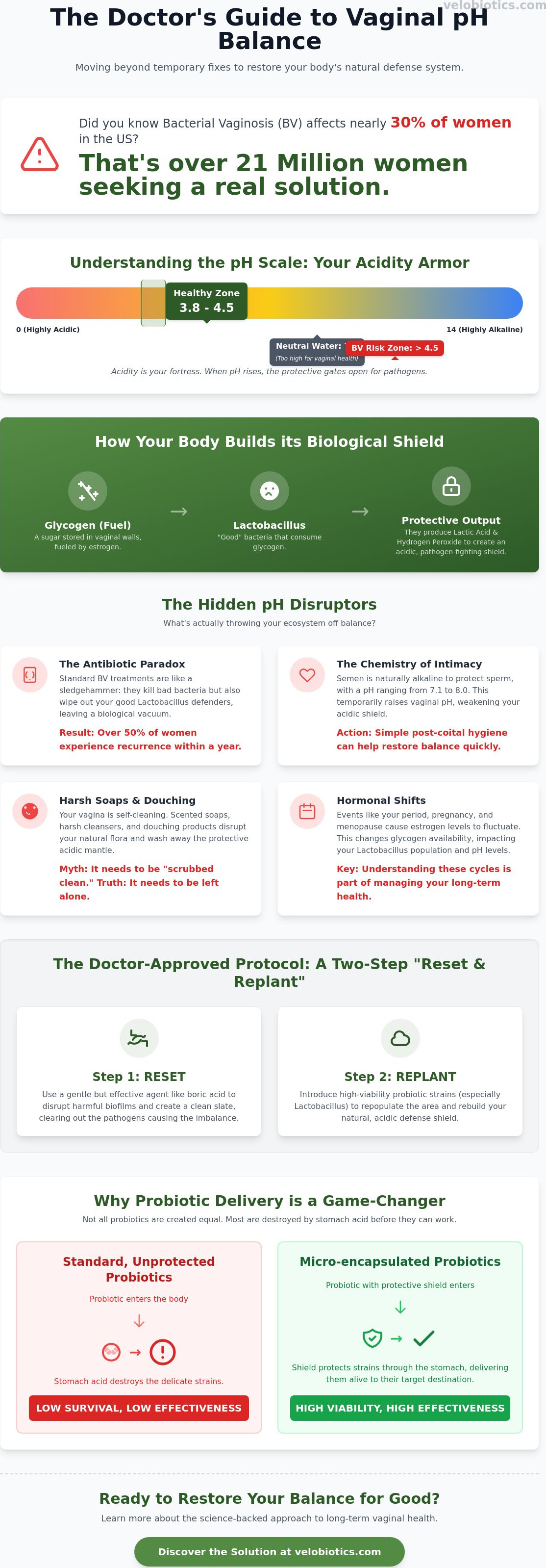
The vagina isn't a passive organ. It's a dynamic, self-regulating biological powerhouse. Think of it as a high-security fortress where the primary defense is acidity. On the pH scale, which runs from 0 (highly acidic) to 14 (highly alkaline), the "sweet spot" for a healthy reproductive-age woman is between 3.8 and 4.5. While a pH of 7.0 is considered neutral for drinking water, in your internal environment, it's dangerously basic. Acidity is your armor. When your pH climbs toward neutral, the protective gates swing wide open for opportunistic pathogens to set up camp.
To understand how to balance vaginal ph, you must first understand the microscopic workers keeping the peace. These are primarily Lactobacillus bacteria. These "good" microbes act like tiny chemical engineers, fermenting sugars into lactic acid to maintain that critical low-pH barrier. Without them, the ecosystem loses its natural ability to inhibit invaders like:
- Gardnerella vaginalis (the primary driver of Bacterial Vaginosis)
- E. coli (often responsible for recurring UTIs)
- Prevotella species
To better understand this concept, watch this helpful video:
The Protective Shield: Lactic Acid and Hydrogen Peroxide
The defense system goes deeper than just acidity. Your vaginal walls store a complex carbohydrate called glycogen. As estrogen levels rise, so does the availability of glycogen, which serves as the primary fuel source for your vaginal microbiome. Lactobacillus species don't just produce lactic acid; many also generate hydrogen peroxide. This chemical is toxic to "bad" anaerobic bacteria that thrive in low-oxygen, high-pH environments. It's a dual-pronged attack. The acid creates an environment where pathogens can't survive, and the hydrogen peroxide actively hunts them down. If this "security detail" is understaffed, you lose the biological shield that prevents infections from taking root.
Why Your pH Changes with Age
Your internal chemistry isn't static. It evolves alongside your hormones. During puberty, a surge in estrogen increases glycogen production, inviting Lactobacillus to move in and lower the pH. Throughout your reproductive years, this cycle remains relatively stable, though it can fluctuate slightly during your period. However, menopause brings a significant shift. As estrogen levels decline, glycogen becomes scarce, and the Lactobacillus population often dwindles. This naturally leads to a higher pH, sometimes above 4.5. This shift explains why post-menopausal women frequently face an increased risk of irritation and dryness. Recognizing these hormonal milestones is a vital part of learning how to balance vaginal ph effectively throughout every stage of life.
The 'pH Disruptors': What’s Actually Throwing You Off Balance?
If you're struggling with how to balance vaginal ph, you've likely noticed that the "solution" often becomes part of the problem. This is what I call the Antibiotic Paradox. When you take metronidazole or other standard antibiotics for BV, it's like using a sledgehammer to fix a leaky faucet. While it kills the infection, it also wipes out your Lactobacillus defenders. Research from the Ragon Institute in March 2026 shows that over half of women treated with standard antibiotics experience a recurrence within a year. This happens because the treatment leaves a biological vacuum that pathogens are more than happy to fill.
Then there's the chemistry of intimacy. Semen is naturally alkaline, usually ranging from pH 7.1 to 8.0, which is necessary for sperm survival. If you are trying to conceive, products like Conceive Plus Fertility Lubricant 8-pack Pre-filled Applicators are specifically designed to support this process. However, this alkalinity temporarily neutralizes your protective 4.5 acidity. Menstrual blood, with a pH of 7.4, does the exact same thing. These aren't "dirty" substances, but they are chemical disruptors that can shift your ecosystem into the danger zone if your microbiome isn't resilient enough to bounce back. Even "feminine washes" marketed as pH-balanced often contain surfactants that strip away the natural moisture and protective oils your body works so hard to produce.
The Role of Biofilms in Recurring Discomfort
Pathogens aren't just floating around in your system; they're smart. Bacteria like Gardnerella create biofilms, which are essentially protective "slime" fortresses. These shields prevent antibiotics from reaching the bacteria hiding inside. If you've ever felt like a treatment worked for three days and then failed, you were likely dealing with a biofilm that wasn't fully dismantled. Breaking these down is the first step in learning how to balance vaginal ph for the long term.
Lifestyle and Environmental Triggers
Your choice of clothing and diet matters more than you think. Synthetic fabrics like polyester trap moisture and heat, creating a tropical greenhouse for yeast and unwanted bacteria. Similarly, high-sugar diets can provide a feast for microorganisms that thrive in less acidic environments. Even stress plays a role; high cortisol levels can suppress the immune response of your vaginal lining, making it easier for imbalances to take hold. For a quick reset after these common disruptors, you might consider a targeted solution like boric acid suppositories to physically break down those stubborn barriers and lower the pH to a healthy level.
Restoring Equilibrium: The Synergy of Boric Acid and Probiotics
Restoring your internal ecosystem requires a strategic, two-phase approach. If you've struggled with chronic recurrence, you know that standard treatments often fail because they don't address those stubborn "slime" fortresses we discussed earlier. To truly master how to balance vaginal ph, you need a "clear and colonize" mission. First, you clear out the bad actors and their biofilms. Then, you immediately replant the good guys to ensure the bad ones can't return. This 1-2 punch is significantly more effective than using either agent alone because it addresses both the cause and the environment of the imbalance.
Boric acid acts as the ultimate clinical reset button. It doesn't just lower the pH; it physically disrupts the protective biofilms that pathogens use as camouflage. Once that barrier is down, the environment becomes hostile to invaders but primed for restoration. However, clearing the field is only half the battle. If you don't follow up with high-viability probiotics, the ecosystem remains a vacant lot, making it easy for infections to move back in. You must replant the colony to maintain long-term stability and prevent the "rebound" effect often seen after antibiotic use.
Boric Acid: Breaking the Biofilm Barrier
Boric acid possesses mild antiseptic and antifungal properties that make it uniquely suited for vaginal health. Boric acid is a pH-balancing agent used since the 19th century. It works by creating an acidic environment that is inhospitable to yeast and BV-causing bacteria while helping to dismantle the sticky matrix where they hide. For those experiencing acute symptoms or a post-intimacy "off" feeling, using a boric acid only suppository can provide a rapid reset of your internal chemistry. It's the physical cleanup crew your body needs before your beneficial bacteria can take back control.
Vaginal Probiotics: Not All Strains are Equal
Once the reset is complete, you must re-establish your bacterial defense force. But don't just grab any probiotic off the shelf. For women's health, Lactobacillus rhamnosus and Lactobacillus reuteri are the undisputed gold standards. These specific strains have a documented ability to migrate to and colonize the vaginal tract, unlike general gut-health strains. The biggest challenge in this process is biological viability. Many products contain billions of bacteria that are already dead by the time they reach your system. You need live, active colonies to see real results. For a deeper dive into which specific bacteria you should look for, check out our Probiotics for BV guide. Understanding these nuances is the secret to moving past temporary fixes.
Safety is paramount when implementing this protocol. Generally, suppositories are best for targeted, rapid resets of the local environment. Oral supplements are excellent for long-term maintenance of your systemic and vaginal flora. Always remember that while boric acid is a powerful tool for restoration, it should never be swallowed. By combining these two clinical powerhouses, you're not just treating symptoms; you're rebuilding a fortress that can defend itself. This dual approach is the most reliable way to learn how to balance vaginal ph for good.
A Doctor’s Practical Protocol for Daily pH Maintenance
Understanding how to balance vaginal ph isn't just about crisis management; it's about the small, daily choices that reinforce your biological fortress. Most women wait for symptoms to appear before taking action, but the most successful clinical outcomes happen when we treat the microbiome like a garden that needs consistent tending. By implementing a few evidence-based habits, you can prevent the "pH spikes" that lead to discomfort and recurring infections. It's about maintaining that 3.8 to 4.5 acidity level through proactive environmental control.
One of the most critical moments for maintenance is immediately following intimacy. As we discussed earlier, semen is highly alkaline. To neutralize this impact, always urinate after sex to clear the urethra and consider a gentle external rinse with warm water. For many of my patients, this simple "post-sex protocol" is enough to prevent the temporary shift in chemistry that often leads to a BV rebound. Additionally, your choice of clothing is a non-negotiable factor. 100% cotton underwear is the only fabric that allows for proper airflow. Synthetic materials like polyester or nylon trap heat and moisture, creating a literal greenhouse for pathogens to multiply.
You should also listen to your body's "scent signals." A healthy vagina has a mild, slightly musky or acidic scent. If you notice a sharp, metallic, or "fishy" odor, your pH has likely crossed the 4.5 threshold already. Monitoring these subtle changes allows you to intervene with a reset before a full-blown infection takes hold. Supporting this from the inside out involves a diet rich in prebiotic fibers, such as those found in garlic, onions, and leeks, which serve as the primary fuel source for your resident Lactobacillus colonies.
Hygiene Habits That Actually Work
The most important rule of vaginal hygiene is that the vagina itself is a self-cleaning oven. It produces its own lubrication and antimicrobial fluids. You should only ever use warm water on the vulva. Avoid "scented" anything; this includes tampons, pads, and especially intimate sprays. These chemicals are notorious for stripping the protective mucosal layer. Finally, always wipe from front to back. This is a basic but vital clinical practice to prevent the migration of E. coli from the perianal area to the vaginal opening, which is a leading cause of both UTIs and pH disruption.
Supplementing for Long-Term Stability
For women who need extra support, targeted supplementation can bridge the gap. I often recommend Femina Probiotic Capsules with Cranberry because they provide dual support for both urinary and vaginal health. The addition of antioxidants like Vitamin C helps support the integrity of the vaginal lining, making it harder for "bad" bacteria to attach. If you're currently taking a course of antibiotics, timing is everything. To ensure your probiotics actually survive, take them at least two hours after your antibiotic dose. This prevents the medication from immediately neutralizing the beneficial strains you're trying to replant. For a comprehensive approach to your health, explore our clinically-backed probiotic solutions designed for maximum biological viability.
Effective Delivery: Why Micro-Encapsulation is the Game Changer
The most sophisticated probiotic formula in the world is useless if the bacteria are dead before they reach their destination. This is the "Survival Problem" that plagues the supplement industry. Most over-the-counter probiotics are incredibly fragile; they are easily destroyed by stomach acid, heat, and even moisture on the shelf. When you are researching how to balance vaginal ph, you must look beyond the colony-forming unit (CFU) count on the label. A product claiming 50 billion CFUs might only deliver a fraction of that in a viable, living state. To fix a biological imbalance, you need living biological agents, not microscopic ghosts.
This is where our proprietary micro-encapsulation technology changes the narrative. By shielding delicate Lactobacillus strains in a protective microscopic seal, we ensure they survive the treacherous journey through the digestive tract or the local environment of the vaginal vault. This technology is engineered to deliver up to 1000 times more viable bacteria to the target site compared to standard, non-encapsulated alternatives. It turns a "maybe" into a clinical certainty. When we talk about "Cookie Fresh" results, we aren't just using a catchy name; we are referring to a rigorous clinical standard of freshness and biological potency that maintains your internal ecosystem against daily disruptors.
The Femina Cookie Fresh Solution
For those needing an immediate intervention, the Femina Probiotics Cookie Fresh with Boric Acid offers a sophisticated approach to restorative care. Unlike products that only offer a pH reset, this formula provides the "1-2 punch" we discussed earlier by combining the biofilm-breaking power of boric acid with a fresh delivery of viable probiotics. These suppositories utilize a dual-action mechanism that simultaneously disrupts pathological biofilms and reintroduces high-viability probiotic strains to meet 2026 clinical wellness standards. It is a comprehensive strategy for anyone who is tired of the "rebound effect" and wants to establish a lasting defense shield.
Choosing Your Path to Balance
Deciding between oral capsules and vaginal suppositories depends entirely on your current symptoms and long-term goals. If you are experiencing an active "off" scent or significant discomfort, suppositories provide direct, localized delivery to the vaginal vault for an immediate impact on your pH levels. For daily maintenance and preventing future spikes, oral capsules offer systemic support that keeps your flora resilient over time. Consistency is the final, essential ingredient in any intimate wellness routine. You deserve to feel balanced, fresh, and confident every single day. By choosing delivery systems that prioritize biological viability, you are finally giving your body the tools it needs to maintain its own natural fortress. Understanding how to balance vaginal ph is the first step; using technology that actually delivers the solution is the second.
Reclaiming Your Confidence and Biological Balance
Your journey toward a stable internal ecosystem doesn't have to be a cycle of frustration and recurrence. We've explored how the 3.8 to 4.5 acidity "sweet spot" serves as your natural fortress and why standard treatments often fail to penetrate stubborn bacterial biofilms. Mastering how to balance vaginal ph requires a shift from temporary fixes to a clinical protocol that prioritizes the biological viability of your beneficial flora. By combining the physical reset of boric acid with the long-term protection of probiotics, you're not just masking symptoms; you're rebuilding your body's defense shield.
Our doctor-formulated approach ensures that delicate Lactobacillus strains survive the delivery process, offering 1000x better survival rates than standard supplements through advanced micro-encapsulation technology. This dual-action strategy is designed for women who demand scientific efficacy and real-world results. It's time to move past the anxiety of intimate health and embrace a routine that works with your biology, not against it. Restore your balance today with Femina Cookie Fresh Boric Acid + Probiotics and step into your day with the confidence you deserve. You've got the science on your side now.
Frequently Asked Questions
What are the first signs that my vaginal pH is off balance?
The earliest indicators of a pH shift are typically a change in odor and discharge consistency. If you notice a sharp, fishy scent or discharge that appears thin and greyish, your pH has likely exceeded the 4.5 threshold. This alkalinity allows anaerobic bacteria to flourish. You might also experience localized itching or a burning sensation during urination, which signals that your protective acidic barrier is compromised.
Can I use boric acid suppositories every day to maintain my pH?
Boric acid should be viewed as a clinical reset button rather than a daily maintenance supplement. While it is highly effective at disrupting biofilms, using it daily can over-acidify the environment and irritate delicate mucosal tissues. Most protocols recommend use for 7 to 14 days during an active imbalance or occasionally after triggers like intimacy. For daily stability, a high-viability probiotic is a much safer long-term strategy.
How long does it take to restore vaginal pH balance after sex?
A healthy microbiome typically restores its acidic 3.8 to 4.5 range within 6 to 24 hours after exposure to alkaline semen. However, if your Lactobacillus colonies are depleted, this recovery can take much longer, leaving you vulnerable to infection. Learning how to balance vaginal ph post-intimacy often involves using a targeted suppository to accelerate this acidification process and prevent pathogens from colonizing while the pH is temporarily elevated.
Is it safe to use pH balancing products during my period?
It is safe and often clinically beneficial to use pH-balancing agents during your period. Menstrual blood has a neutral pH of 7.4, which can act as a catalyst for bacterial overgrowth. Using a restorative suppository during the final days of your cycle helps counteract this alkalinity. This prevents the common post-period odor that many women experience when their natural acidity doesn't bounce back quickly enough on its own.
Will eating yogurt really help balance my vaginal pH?
Eating yogurt provides some systemic benefits, but it is rarely enough to resolve a clinical pH imbalance. The probiotic strains in food must survive stomach acid and then migrate from the gut to the vaginal tract. By May 2026, clinical standards favor micro-encapsulated supplements because they ensure the bacteria actually reach their destination alive. Yogurt is a great snack, but it lacks the targeted potency required for significant ecosystem restoration.
What is the difference between a yeast infection and a pH imbalance?
A yeast infection is a fungal overgrowth that often occurs even when your pH is within the normal acidic range. In contrast, a pH imbalance like Bacterial Vaginosis is characterized by a rise in pH above 4.5. While yeast causes thick, white discharge and intense itching, a pH imbalance typically produces a fishy odor and thin discharge. Understanding how to balance vaginal ph specifically addresses the bacterial side of this equation.
Can a partner's diet affect my vaginal pH balance?
A partner's diet does not directly change your pH, but the chemical composition of their semen does. High-sugar diets or certain medications can alter the microbial load or alkalinity of seminal fluid, which then interacts with your internal environment. While you can't control their biology, you can manage your own resilience by ensuring your Lactobacillus defense shield is strong enough to handle these temporary alkaline introductions without crashing.
When should I stop home treatment and see a medical professional?
You should consult a doctor if you experience pelvic pain, fever, or if your symptoms don't improve after seven days of home care. Additionally, the 2026 California Senate Bill 39 guidelines recommend professional consultation if you have a history of STDs or are pregnant. If you notice a bloody or foul-smelling discharge that persists despite using a reset protocol, it is time for a clinical diagnosis to rule out more serious infections.

Disclaimer
Information and statements regarding dietary supplements/products have not been evaluated by the Food and Drug Administration, MCC/SAHPRA, MHRA, TGA or any other drug regulatory authority and are not intended to diagnose, treat, cure, or prevent any disease. Information on this website is provided for informational purposes only and is a result of years of practice and experience by the author. This information is not intended as a substitute for the advice provided by your physician or other healthcare professional or any information contained on or in any product label or packaging. Do not use the information on this website for diagnosing or treating a health problem or disease, or prescribing medication or other treatment. Always speak with your physician or other healthcare professional before taking any medication or nutritional, herbal, or homeopathic supplement, or using any treatment for a health problem. If you have or suspect that you have a medical problem, contact your healthcare provider promptly. Do not disregard professional medical advice or delay in seeking professional advice because of something you have read on this website.