

How to Insert a Vaginal Suppository Correctly: A Doctor’s Guide (2026)
What if the most effective part of your vaginal health routine didn't have to feel like a messy, awkward chore? It's a valid question for the millions of women shifting toward proactive microbiome care; a movement so large the vaginal probiotic suppository market is projected to hit $4.1 billion by 2034. Many people feel a sense of dread about "the mess" or worry the product will simply fall out before it can work. However, mastering how to insert a vaginal suppository correctly is a simple science that ensures the active ingredients reach their target with zero stress.
I know that internal treatments can feel intimidating, but they shouldn't be a source of anxiety. You deserve a solution that provides fast relief without the discomfort. This guide offers a doctor-approved protocol to help you achieve a successful, mess-free experience every time. We will explore the best positions for comfortable placement, medical tips to prevent leakage, and the specific biological factors that help these formulas stay exactly where they belong. Let's bridge the gap between clinical expertise and your daily comfort.
Key Takeaways
- Understand why deep placement in the upper vaginal canal is the secret to maximizing ingredient absorption and biological viability.
- Master our seven-step medical protocol on how to insert a vaginal suppository correctly to ensure your treatment stays secure and effective overnight.
- Identify the "gold standard" body positions that eliminate the fear of the product falling out while significantly reducing the risk of leakage.
- Learn how to manage the "Drip Factor" using breathable cotton solutions that protect your clothes without irritating your delicate microbiome.
- Discover the critical functional difference between using boric acid as a "cleaner" versus utilizing micro-encapsulated probiotics as "restorers."
Mastering the Science of the Slide: Why Correct Insertion Matters
Understanding the mechanics of your body changes the way you approach self-care. To get the best results from your treatment, you first need to understand the delivery system. What is a suppository? It is a solid, often bullet-shaped dosage form designed to be inserted into a body orifice where it dissolves at internal body temperature. In the case of vaginal health, this delivery method is superior for localized issues because it bypasses the digestive system and delivers active ingredients directly to the source of the imbalance.
The success of this method relies heavily on placement. The upper vaginal canal contains a dense network of blood vessels and a specific mucosal environment that facilitates high-efficiency absorption. If the product isn't placed deep enough, you risk "premature leakage," where the supplement exits the body before the ingredients can stabilize the microbiome. Learning how to insert a vaginal suppository correctly ensures that formulas like our Femina Probiotic COOKIE FRESH Suppositories stay in place long enough to achieve maximum biological viability.
To better understand this concept, watch this helpful video:
Anatomy 101: Where the Suppository Actually Goes
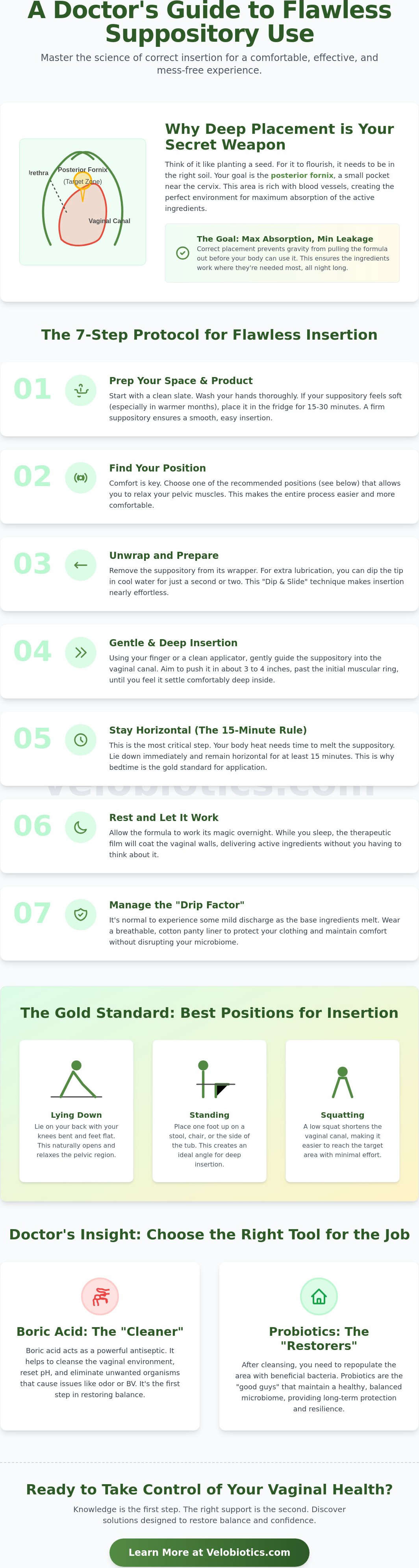
Many beginners feel a baseline "fear factor" simply because they aren't sure where the product is supposed to go. It's common to confuse the vaginal opening with the urethra, which is the much smaller opening where urine exits. The vaginal canal is a 3 to 4 inch muscular tube. Your goal is to guide the suppository past the initial muscular ring and toward the "posterior fornix." This is the small pocket of space located near the cervix. When the product reaches this depth, it's cradled by the natural curves of the internal walls, making it much less likely to slip out during the night.
The Goal: Maximum Absorption, Minimum Leakage
Once inserted, your natural body heat begins a phase change, melting the solid suppository into a liquid therapeutic film. This film then coats the vaginal walls to deliver its active compounds. During the first 15 minutes of this process, gravity is your primary enemy. If you stand up too quickly, the liquid can flow downward before the mucosal lining has a chance to absorb it. This is why we focus on how to insert a vaginal suppository correctly at bedtime; it allows the product to work in a horizontal environment where the vaginal walls can naturally hold the therapeutic liquid in place for several hours.
The 7-Step Professional Protocol for Flawless Insertion
Preparation is roughly 90% of the success for any clinical protocol, and vaginal health is no exception. If you've ever struggled with a suppository that seemed to have a mind of its own, it's likely because the environmental conditions weren't optimized before you started. Success requires a blend of hygiene, temperature control, and physical technique. When you master how to insert a vaginal suppository correctly, the process becomes a seamless part of your nightly ritual rather than a source of frustration.
Pre-Game Prep: Clean Hands and Firm Suppositories
The first rule of the lab is also the first rule of your bathroom: hygiene is non-negotiable. You don't want to introduce external pathogens into a microbiome you're trying to heal. Beyond cleanliness, you must check the structural integrity of the product. If a suppository feels "mushy" or soft due to 2026 summer temperatures, it won't slide effectively. Simply pop the blister pack into the refrigerator for 15 to 30 minutes to firm it up before use.
Before you begin, gather your "kit." You'll need the suppository, a panty liner for any residual discharge, and a glass of water for the "dip and slide" technique. If you aren't using a clean applicator, ensure your fingernails are trimmed short to prevent micro-tears in the delicate vaginal tissue.
The Main Event: Step-by-Step Guidance
Follow this methodical progression to ensure the active ingredients reach their intended destination without unnecessary mess.
- Steps 1-3: Wash your hands thoroughly with mild, unscented soap. Carefully unwrap the suppository from its foil or plastic shell. Find your "sweet spot" position, which for most people is lying on their back with knees tucked toward the chest.
- Step 4: Use the "dip and slide" method. Quickly dip the suppository in water or a tiny amount of water-based lubricant to reduce friction.
- Step 5: Gently guide the suppository into the vaginal opening. The suppository should be pushed in as far as it is comfortable.
- Step 6: Aim for a depth of about 2 inches, or roughly the length of your pointer finger. If using an applicator, depress the plunger fully.
- Step 7: Remove the applicator or your finger and wash your hands again. Immediately transition into the "horizontal hold" by staying reclined for at least 15 minutes.
This final resting period allows the capsule to begin its phase change from solid to liquid without the interference of gravity. If you’re looking for a streamlined experience, our Cookie Fresh Boric Acid options are designed for high structural stability and rapid dispersion once inserted. By following this clinical protocol, you ensure that every milligram of the formula is utilized by your body for maximum recovery.
Finding Your Flow: The Best Positions for Comfortable Insertion
Your anatomy is as unique as your fingerprint, so it makes sense that the best way for you to manage your health might differ from someone else. While the end goal remains constant, the physical path you take to get there should be whatever feels most natural for your mobility and comfort level. When patients ask how to insert a vaginal suppository correctly, they often expect a rigid, one-size-fits-all rule. In reality, it's about finding the specific angle that allows for the deepest placement with the least amount of physical resistance.
The Bedtime Standard: Lying on Your Back
Lying on your back is widely considered the gold standard for clinical efficacy, especially for nighttime treatments. When you lie down and bring your knees toward your chest, you're effectively opening the vaginal vault and aligning the canal for a straight, unobstructed path. This reduces the risk of the suppository catching on the vaginal walls before it reaches the proper depth.
To give yourself a biological edge, try placing a firm pillow under your hips. This creates a subtle "gravity tilt" that encourages the melting formula to pool near the cervix rather than toward the vaginal opening. This setup is ideal for highly concentrated formulas like Femina Cookie Fresh. By utilizing this tilt, you ensure the active ingredients have several hours of undisturbed contact with your internal tissues while you sleep.
The Quick-Fix: Standing with One Foot Elevated
Sometimes, your schedule doesn't allow for a full reclining routine. If you're on the go or have limited mobility that makes lying down difficult, the "One Leg Up" method is your best ally. Use a stable prop like the edge of a bathtub or a closed toilet seat to elevate one foot. This position shifts your pelvic floor and allows for easier entry than standing with both feet flat on the floor.
For the best results, use your non-dominant hand to gently "part the curtains" or hold the labia aside. This provides a clear path and prevents the suppository from making unnecessary contact with external skin, which can sometimes be sensitive. It's a simple way to maintain stability while ensuring you still reach that necessary two-inch depth for maximum absorption.
If you find that you still struggle to reach deep enough, consider a deep squat. Squatting naturally "shortens" the vaginal canal by bringing the cervix slightly lower. This is a practical solution for those with shorter fingers or anyone who finds the standing reach a bit awkward. No matter which position you choose, the key is muscle relaxation. Your pelvic muscles are incredibly strong. If you're tensed up, they will resist the insertion. Take a slow, deep breath, choose your stance, and let your body relax into the process.
Troubleshooting the Tumble: Managing Mess, Discharge, and Discomfort
Even when you've mastered the technique of how to insert a vaginal suppository correctly, the post-insertion phase can bring up new questions. Many women feel a moment of panic when they notice a "chalky" or white residue in their underwear the next morning. I want to reassure you: this discharge is actually a positive clinical indicator. It signifies that the suppository has successfully undergone its phase change from a solid to a liquid and is now coating the vaginal walls. The residue you see is simply the carrier material exiting the body after the active ingredients have been absorbed.
The "Drip Factor" is a biological reality of this delivery method. However, how you manage it impacts your recovery. I always recommend using 100% cotton liners rather than standard plastic-backed pads. Plastic creates a heat-trapping barrier that can encourage the growth of opportunistic pathogens. Cotton allows for essential breathability, which supports the restoration of your delicate microbiome. Timing also plays a critical role in success. While you can technically use these products at any time, 10:00 PM is significantly more effective than 7:00 AM. A full night of horizontal rest prevents gravity from pulling the formula out before it reaches maximum biological viability.
What happens if the suppository slips out? This is a common concern. If the capsule has only slipped to the vaginal opening, you can simply wash your hands and push it back to the proper depth. However, if it has fallen onto a surface like the floor or into the toilet, discard it immediately. Introducing environmental bacteria into the vaginal vault can cause a secondary infection that complicates your treatment. It's always better to start fresh with a new capsule than to risk your internal health.
Mess Management: Staying Fresh While You Heal
One of the most frequent mistakes I see in clinical practice is the use of tampons to "stop the leak" of a suppository. This is counterproductive. Tampons are designed to be highly absorbent; they will pull the medication away from your vaginal walls and into the cotton core of the tampon. This leaves you with almost zero therapeutic benefit. Stick to the "Cotton Only" rule for both liners and underwear to ensure your microbiome has the best environment for recovery. For a deeper dive into managing specific imbalances, read our Probiotics for BV guide.
When It Doesn’t Feel Right: Discomfort and Sensitivity
It's important to distinguish between the "tingle of work" and a genuine adverse reaction. Minor stinging can occur if the vaginal tissue is already inflamed from an existing infection. This is often a temporary sensation as the pH levels begin to shift. However, if you experience intense burning, swelling, or a visible rash, stop use immediately. Many low-quality products use industrial fillers that cause irritation. We prioritize high-purity ingredients to minimize these risks. If you want to ensure you're using a formula designed for sensitive systems, explore our clinical-grade suppository range here.
Beyond the Basics: Choosing the Right Support for Your Microbiome
Mastering the physical technique of how to insert a vaginal suppository correctly is the first step toward lasting relief, but the clinical efficacy of your routine depends on the "what" just as much as the "how." In my years as a physician and researcher, I’ve seen that many women treat their vaginal health as a series of isolated events. In reality, your microbiome is a dynamic ecosystem that requires a sophisticated balance of "cleaning" and "restoring" to maintain its natural defenses and stay within the healthy pH "sweet spot" of 3.8 to 4.5.
The Power Duo: Boric Acid + Probiotics
Think of boric acid as the clinical "cleaner" of the vaginal vault. Its primary role is to disrupt pathogenic biofilms. These are complex, sticky structures that harmful bacteria and fungi build to protect themselves from your body's immune response. While boric acid is excellent at resetting the environment, it doesn't rebuild the beneficial flora. This is where probiotics step in as the "restorers." To achieve a healthy state, you must recolonize the space with beneficial Lactobacillus strains that keep opportunistic pathogens at bay.
In 2026, we’ve moved beyond simple powders. Modern technology now allows for the micro-encapsulated delivery of live probiotic strains within the suppository itself. This ensures that the "good" bacteria remain protected from environmental factors until they reach the target site, maximizing their biological viability. If you're dealing with recurring issues, using a dual-action product that combines these elements is a much more efficient strategy than using a single-ingredient solution.
Your Intimate Wellness Routine
You don't always need a suppository every single day. Many of my patients find significant success using them as a targeted intervention. This "as needed" approach is particularly effective after a menstrual cycle, after intimacy, or during times of high stress when the microbiome is most vulnerable to pH shifts. This targeted strategy prevents over-treatment while providing a safety net when your body needs it most.
To create a truly resilient system, look at the bigger picture. Your intimate health is deeply connected to your digestive system. Integrating your intimate care into a broader gut health routine helps manage the bacterial reservoirs that can often lead to recurring vaginal issues. Pairing your nightly suppository with high-quality oral probiotics for women provides a 360-degree approach to wellness.
My final doctor’s note is this: trust your body’s signals. If you’ve followed the steps on how to insert a vaginal suppository correctly and still feel persistent discomfort, always verify your status with a healthcare professional. Science and self-care work best when they're in total alignment, ensuring your body has the tools it needs to protect and heal itself.
Take Command of Your Intimate Health Journey
Improving your intimate health routine shouldn't feel like a guessing game. By mastering the clinical protocol of how to insert a vaginal suppository correctly, you've moved past the fear of discomfort and the frustration of "the mess." You now understand that depth matters for absorption, that gravity is a factor during the first fifteen minutes, and that your choice of position can make all the difference in your comfort. These small, practical shifts in your routine ensure that every dose reaches its target with maximum efficiency.
It is time to move beyond reactive care and embrace a proactive, science-backed approach. Our dual-action formula combines the cleaning power of boric acid with the restorative strength of probiotics. We use proprietary micro-encapsulation technology to ensure strain viability, a system designed by medical doctors specifically for high clinical efficacy. You don't have to settle for industry-wide efficacy gaps. Restore your balance with Femina Cookie Fresh Probiotic + Boric Acid Suppositories and feel the difference that biological viability makes. Your body has an incredible ability to heal; you're simply providing the precision tools it needs to succeed.
Frequently Asked Questions
Can I pee immediately after inserting a vaginal suppository?
Yes, you can certainly urinate after insertion. The urethra and the vaginal canal are entirely separate anatomical pathways, so liquid exiting one won't wash the product out of the other. However, the physical act of bearing down or wiping can sometimes shift a capsule that hasn't been placed deep enough. I recommend waiting about 15 minutes to let the melting process begin before you head to the bathroom.
How long does it take for a vaginal suppository to fully dissolve?
Most clinical formulas take between 15 and 30 minutes to fully transition from a solid capsule into a therapeutic liquid film. This timing depends on your internal body temperature and the specific carrier oils used in the product. While the initial melt is fast, the active ingredients usually need several hours of undisturbed contact with the vaginal walls to achieve maximum biological viability and effectiveness.
Is it safe to have sex after inserting a suppository?
It's generally best to wait. Intercourse can disrupt the absorption process and might cause unnecessary irritation if the product hasn't fully dissolved. In addition, some ingredients like boric acid can be abrasive or have an unpleasant taste for your partner. For the best clinical outcomes, I advise waiting at least 4 to 6 hours after insertion before engaging in any intimate activity.
What happens if I forget to use my suppository at night?
Don't worry; simply resume your protocol the following evening. You shouldn't double the dose to make up for a missed night, as a high concentration of ingredients all at once can lead to tissue sensitivity. Consistency is the primary driver of microbiome restoration, but a single missed night won't ruin your progress. Just focus on how to insert a vaginal suppository correctly during your next scheduled application.
Can I use a vaginal suppository during my period?
You can use them, but the efficacy might be slightly lower. Menstrual flow can physically flush the active ingredients out of the vaginal vault before they have a chance to be absorbed by the mucosal lining. If you choose to continue treatment during your cycle, avoid using tampons. Tampons are designed to be highly absorbent and will pull the medicine away from your body, rendering the treatment ineffective.
Why do I have so much discharge the morning after using a suppository?
This is a normal part of the process and shouldn't cause alarm. The "chalky" or watery residue is just the carrier base exiting your body after the active compounds have been absorbed. It isn't a sign of a new infection or a failed treatment. As long as you followed the instructions on how to insert a vaginal suppository correctly, the vital nutrients have already reached their target.
Should I push the suppository in as far as my finger can go?
Yes, the goal is to reach the posterior fornix near the cervix. Pushing the capsule in about 2 inches, or roughly the length of your pointer finger, ensures it remains in the upper vaginal canal. This area has the highest concentration of blood vessels for absorption and provides a natural "pocket" that prevents the product from slipping out when you eventually stand up.
Can I use a vaginal suppository if I am pregnant or breastfeeding?
You must consult your obstetrician before starting any internal treatment. While many probiotics are considered safe, certain ingredients like boric acid are strictly contraindicated during pregnancy due to potential risks to the developing fetus. Always seek professional medical clearance to ensure the protocol is safe for both you and your baby while you are pregnant or nursing.

Disclaimer
Information and statements regarding dietary supplements/products have not been evaluated by the Food and Drug Administration, MCC/SAHPRA, MHRA, TGA or any other drug regulatory authority and are not intended to diagnose, treat, cure, or prevent any disease. Information on this website is provided for informational purposes only and is a result of years of practice and experience by the author. This information is not intended as a substitute for the advice provided by your physician or other healthcare professional or any information contained on or in any product label or packaging. Do not use the information on this website for diagnosing or treating a health problem or disease, or prescribing medication or other treatment. Always speak with your physician or other healthcare professional before taking any medication or nutritional, herbal, or homeopathic supplement, or using any treatment for a health problem. If you have or suspect that you have a medical problem, contact your healthcare provider promptly. Do not disregard professional medical advice or delay in seeking professional advice because of something you have read on this website.