

Prebiotics for Kids: A Doctor’s Guide to Growing a Healthy Gut Garden in 2026
Last Tuesday, a mother named Sarah sat in my clinic, exhausted because her three-year-old hadn't had a bowel movement in four days. It's a heartbreakingly common scene; in fact, a 2023 study published in the Journal of Pediatrics indicates that up to 30% of children experience chronic constipation. You've likely spent hours hiding spinach in brownies or staring at pharmacy shelves, wondering if prebiotics for kids are the missing piece of the puzzle. It's frustrating when you're doing your best but your child's digestive system just won't cooperate.
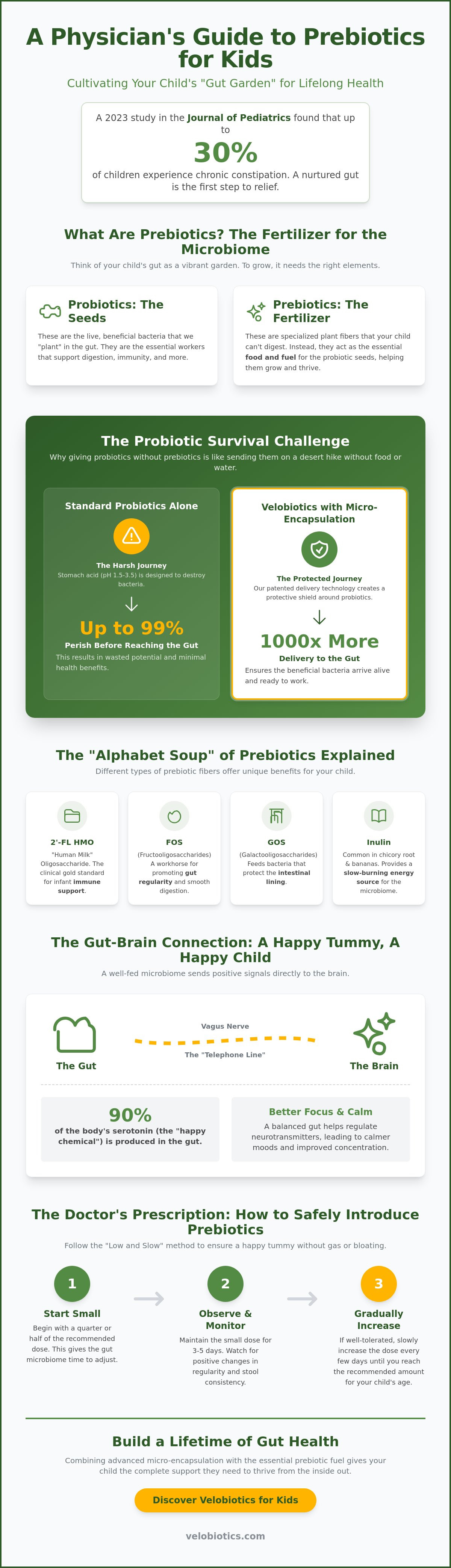
I'm here to simplify the science and give you a clear, physician-led plan to cultivate your child's internal "gut garden." You'll learn exactly how to distinguish between prebiotics and probiotics, which high-fiber foods actually pass the toddler taste test, and how to read supplement labels like a pro. We're moving past the guesswork to ensure your child's microbiome gets the specific nourishment it needs for a stronger immune system and daily regularity. I'll also explain how our micro-encapsulation technology provides 1000x more delivery to ensure these vital nutrients survive harsh gastric acid and reach the gut alive.
Key Takeaways
- Understand why prebiotics act as the essential "fertilizer" and soil that allow your child's beneficial bacteria to flourish and thrive.
- Discover how prebiotics serve as a "packed lunch" for good bacteria, ensuring they survive the harsh journey through gastric acid to reach the colon alive.
- Learn how to balance a "food-first" philosophy with clinical-grade supplements to bridge the common fiber gaps found in modern diets.
- Master the "low and slow" physician-approved method for introducing prebiotics for kids to ensure a happy tummy without gas or bloating.
- Explore why advanced micro-encapsulation delivery technology is more critical for gut health than simply choosing the supplement with the highest bacterial count.
What Are Prebiotics for Kids? (The "Fertilizer" for the Microbiome)
Think of your child's gut as a vibrant, growing garden. If probiotics are the beneficial seeds we plant to ensure a diverse ecosystem, then prebiotics for kids are the nutrient-rich fertilizer and soil that allow those seeds to flourish. As a doctor, I often see parents focus exclusively on the bacteria themselves. However, without the right fuel, even the most advanced probiotics struggle to survive the journey through gastric acid or colonize effectively once they reach their destination.
Technically, Prebiotics are specialized, non-digestible plant fibers. While your child's digestive system cannot break these fibers down, the "good" bacteria in their gut feast on them. This biological process is vital during the first 1,000 days of life. This window, which spans from conception to a child's second birthday, is a critical period where the gut's "blueprint" is established. Scientific data from 2024 suggests that a well-supported microbiome during this timeframe can influence immune responses and metabolic health for decades. It is important to distinguish these from "regular fiber." While bulk-forming fibers help with stool consistency, prebiotic fibers are targeted nutrients designed to selectively stimulate the growth of beneficial microbes like Bifidobacteria.
To better understand this concept, watch this helpful video:
The Alphabet Soup: HMOs, FOS, and GOS Explained
We categorize these fibers into specific groups based on their molecular structure and how they interact with the gut. 2’-FL HMO is a "human milk" prebiotic. Once found only in breast milk, it is now a clinical gold standard for infant immune support. Fructooligosaccharides (FOS) and Galactooligosaccharides (GOS) act as the primary workhorses for gut regularity. They ensure that waste moves through the system efficiently while feeding the bacteria that protect the intestinal lining. Finally, Inulin is a common plant-based prebiotic found in chicory root, bananas, and asparagus. It provides a steady, slow-burning energy source for the microbiome to stay active throughout the day.
How Prebiotics Support the Gut-Brain Axis
There is a physical "telephone line" called the vagus nerve connecting a child's tummy directly to their brain. When the microbiome is well-fed with prebiotics for kids, it produces short-chain fatty acids (SCFAs) like butyrate. These compounds are essential for healthy brain development and help regulate neurotransmitters. Clinical studies show that roughly 90% of the body's serotonin is produced in the gut. A child with a balanced, well-nourished microbiome often experiences better focus and calmer afternoons because their brain is not receiving "distress signals" from an imbalanced digestive system. For a comprehensive approach to gut health, combining these fibers with a high-quality delivery system like Biokid chewable probiotics ensures the seeds and the fertilizer work in perfect harmony to support both body and mind.
Why the "Survival" of Good Bacteria Depends on Prebiotics
Imagine sending your child on a long, grueling hike through a desert without a backpack, water, or a map. That is exactly what happens when you give them a standard probiotic supplement without the right support. The human stomach is a literal vat of hydrochloric acid with a pH between 1.5 and 3.5. This harsh environment is designed to dissolve food and destroy invading pathogens. Unfortunately, it does not distinguish between "bad" bacteria and the expensive probiotics you just purchased. Without a protective strategy, up to 99% of those beneficial bugs perish before they ever reach the colon.
This is where prebiotics for kids become essential. Think of prebiotics as a "packed lunch" for the bacteria during their journey. When we combine probiotics with their preferred food source, we create what scientists call a "synbiotic." This synergy is a total game-changer for pediatric health. It ensures that once the bacteria arrive at their destination in the large intestine, they have the immediate fuel required to colonize and flourish. While you can find natural sources in Prebiotic Foods like bananas, chicory root, and asparagus, a targeted supplement ensures the "good guys" aren't just passing through, but are actually moving in and setting up shop.
The Problem with Standard Kids’ Supplements
Most children's supplements, especially those sugary gummies, lose their potency before they even leave your kitchen cupboard. Heat, moisture, and light are the enemies of live cultures. This leads to the "Probiotic Gap," which is the massive discrepancy between the CFU count listed on the label and the number of bacteria that actually reach the gut alive. In many cases, by the time a child swallows a standard supplement, the bacteria are already dormant or dead. We focus on closing this gap because a supplement that doesn't survive the journey is just expensive waste. If you want to see how we tackle this differently, you can explore the Biokid delivery system designed for maximum resilience.
Micro-encapsulation: The Doctor’s Secret Weapon
As a physician, I knew we needed a better way to protect these delicate microbes. This led to the Velobiotics™ philosophy of micro-encapsulation. We wrap the "good guys" in a microscopic, acid-resistant shield. This technology allows for 1000x more delivery of live bacteria to the gut compared to non-encapsulated alternatives. In pediatric gut health, survival is the only metric that truly matters. If the bacteria don't reach the gut alive, they cannot support the immune system or improve digestion. You can read the full account of how we pioneered this technology in the Velobiotics story, where I detail our journey from the lab to the medicine cabinet.
Prebiotic Foods vs. Supplements: A Physician’s Comparison
As a doctor and a father, I always advocate for a "food first" philosophy. Think of your child’s gut as a literal garden. Whole foods are the rich, organic fertilizer that helps the "good" bugs grow. However, we have to face the "Gap Fill" reality. Data from the National Health and Nutrition Examination Survey (NHANES) reveals a startling statistic: 95% of Americans do not meet their daily fiber requirements. For children, this deficiency can stall the development of a robust microbiome.
To determine if your child is hitting the mark, I recommend the "Age + 5" Rule. It is a simple clinical calculation. Take your child's age and add five to get their minimum daily fiber goal in grams. For example, a 5-year-old needs 10 grams of fiber, while a 12-year-old requires 17 grams. If your child is a "beige food" enthusiast who avoids greens, they likely aren't getting enough prebiotics for kids to sustain healthy bacterial colonies.
When the gap between what they eat and what they need becomes too wide, it's time to look at supplementation. I recommend moving from the grocery aisle to the supplement shelf if your child experiences frequent digestive upset, has a limited palate, or has recently finished a course of antibiotics. Citing professional resources like this guide on Prebiotic Foods can help you identify which whole foods to prioritize before reaching for a bottle.
Top 10 Prebiotic Foods for Picky Eaters
You don't need exotic ingredients to feed the gut. Bananas are a staple, but here is a clinical tip: the greener they are, the better. Slightly under-ripe bananas contain higher levels of resistant starch, which survives digestion to feed the colon. For breakfast, I suggest "stealth" prebiotics. Mix ground flaxseeds into oatmeal or serve sliced apples with the skin on, as the pectin is a powerful prebiotic. If your child hates asparagus or onions, try sautéing them until they caramelize. This reduces the "bite" and makes the prebiotic fibers easier to digest for sensitive tummies.
Choosing a High-Quality Kid’s Prebiotic
Reading a label requires a skeptical eye. Many products fall into the "Sugar Trap," where gummies contain up to 3 grams of sugar per serving. That is essentially candy disguised as health care. Look for strain diversity and specific fiber types like Inulin or XOS. Most importantly, ensure the bacteria can actually survive the journey. Our BioKid Chewable Probiotics utilize patented micro-encapsulation technology. This protects the delicate cargo from stomach acid, ensuring the prebiotics for kids and the probiotics actually reach the gut alive to do their job.
The Doctor’s Prescription: How to Safely Introduce Prebiotics
Introducing prebiotics for kids isn't a race; it's a marathon where the finish line is a flourishing, resilient microbiome. The golden rule in my clinical practice is "Low and Slow." If you overwhelm a child's gut with a massive dose of fiber overnight, the resident bacteria will throw a metabolic party that results in excess gas and abdominal distension. I recommend starting with 25% of the target dose for the first 4 days. This cautious entry allows the microbial population to shift and adapt without causing physical discomfort or "tummy protests."
Hydration is your best friend during this transition. Prebiotics are essentially specialized fibers that act like sponges, requiring water to move smoothly through the digestive tract. Without adequate H2O, these fibers can stall in the colon, leading to constipation rather than relief. Ensure your child drinks an extra 8 to 12 ounces of water daily when increasing prebiotic intake. For timing, morning administration is usually best. This aligns with the body's natural circadian rhythms of digestion and ensures the microbial "fuel" is available throughout the day's active periods.
Monitoring the "Poop Progress" is a vital clinical tool for parents. We are looking for stools that resemble Type 3 or Type 4 on the Bristol Stool Scale, meaning they are smooth, sausage-like, and easy to pass. If you see liquid stools or notice your child is straining, it's a clear signal to scale back the dosage by 50% for a few days. Consistency is more important than quantity when you're first starting out.
Stealth Health: Recipes for Prebiotic Success
Sometimes, the best medicine is the one they don't even know they're taking. The "Gut-Garden Smoothie" is a staple in my household. Blend 1 cup of frozen blueberries with a handful of baby spinach and 1 tablespoon of ground flaxseed. The deep purple of the berries masks the greens perfectly. For weekend breakfasts, try Prebiotic Pancakes by replacing standard flour with oat flour and adding 2 teaspoons of green banana powder. My favorite doctor's tip? Mix unflavored prebiotic powders into organic applesauce or full-fat Greek yogurt. The texture remains unchanged, but the nutritional profile for the microbiome skyrockets.
Managing Tummy Troubles During the First Week
It's normal to see a slight increase in flatulence during the first 72 hours. This is "good" adjustment gas, indicating the beneficial bacteria are actively fermenting the new food source. However, if your child experiences sharp pain or persistent diarrhea, that's a sign of intolerance or a dose that is too high for their current gut state. Titrate the dose downward until symptoms resolve, then wait 3 days before trying to increase again. If you have older children in the house, you can apply similar logic by following this Probiotics for Teens guide to ensure their gut health is also optimized.
Building a Lifetime of Gut Health with Velobiotics
I founded Velobiotics with a clinical mission that hits close to home: making professional-grade gut health accessible for every family. In my years of medical practice, I saw a massive gap between what science knew about the microbiome and what parents could actually find on store shelves. My goal was to move beyond the "wellness" buzzwords and provide families with formulas that are lab-tested, non-GMO, and backed by hard data. We aren't just selling supplements; we're providing the tools for a biological foundation that lasts a lifetime.
The industry often focuses on massive CFU counts, but as a physician, I know that numbers aren't the whole story. If you put 50 billion bacteria into a capsule but they all die in the stomach's harsh acidic environment (which usually sits at a pH of 1.5 to 3.5), your child gets zero benefit. This is why Velobiotics focuses on delivery technology. Our patented micro-encapsulation ensures that the beneficial bacteria and prebiotics for kids reach the lower intestine alive. We prioritize survival over marketing hype, ensuring your "gut garden" gets the actual seeds it needs to flourish.
Consistency is always more important than perfection. You don't need to have a perfect organic meal every single day to see results. Small, repeated actions create the most significant biological shifts. By focusing on the science of delivery and the quality of strains, we give parents the peace of mind that their efforts are actually making a measurable difference in their child's vitality.
The Velobiotics Difference for Families
Our unique 16-strain technology is designed because a diverse gut is a resilient gut. While many brands use only one or two strains, we utilize a broad spectrum to support everything from digestive comfort to immune response. For whole-family wellness, I often recommend our Velo16 Probiotic Capsules. These provide a clinical-strength solution that works for adults and older children alike. We maintain total transparency in our sourcing and clinical evidence, so you never have to guess what you're putting into your family's bodies.
Your Next Steps to a Healthier Tummy
Taking control of your child's gut health doesn't have to be overwhelming. You can start today with these three practical steps:
- Start small: Introduce just one prebiotic-rich food, like a slightly green banana or a serving of asparagus, once a day. Observe your child’s digestion and energy levels over a 7-day period.
- Consult your physician: Before you begin any new supplement regimen, have a conversation with your pediatrician to ensure it aligns with your child's specific health history.
- Stay informed: Education is your best tool. Join our community to receive more doctor-led health tips and deep dives into the latest microbiome research.
When you focus on the right prebiotics for kids and use delivery systems that actually work, you're doing more than just fixing a tummy ache. You're setting the stage for a lifetime of health. Let's grow that garden together.
Empower Your Child’s Gut Garden Today
Nurturing your child's internal ecosystem is a long-term investment that starts with the right fuel. We've explored how prebiotics for kids act as the essential fertilizer that allows beneficial bacteria to flourish against the harsh environment of the stomach. It's vital to remember that even the best bacteria won't help if they don't reach their destination alive. As a physician, I formulated our system to bridge the gap between clinical science and daily wellness, ensuring your family has practical tools for better health.
Our research shows that delivery is everything. Using patented Velobiotics™ technology, we provide 1000x more delivery of live cultures to the lower gut compared to standard, non-encapsulated probiotics. With 16 diverse probiotic strains paired with essential prebiotic fibers, you aren't just giving a supplement; you're providing a survival kit for their microbiome. This scientific approach ensures your child’s gut garden stays vibrant and resilient through 2026 and beyond.
Give your child’s gut the "survival" advantage with BioKid Chewables. Let's grow a healthier future together, one tiny microbe at a time.
Frequently Asked Questions
What is the difference between prebiotics and probiotics for kids?
Probiotics are live beneficial bacteria, while prebiotics are the specialized fiber-rich "food" that nourishes them. Think of your child’s gut as a garden. The probiotics are the seeds you plant, and prebiotics are the fertilizer that helps them grow. Without prebiotics, those beneficial microbes can't thrive. Our Velobiotics technology ensures that the probiotics reach the gut alive to consume that vital prebiotic fiber.
Can prebiotics help with toddler constipation?
Yes, prebiotics effectively soften stools and improve bowel frequency by drawing water into the colon and stimulating fermentation. Clinical studies show that prebiotic fibers like inulin increase bowel movements by an average of 0.8 per week in children. This process creates a smoother transit time for waste. By feeding the right bacteria, we ensure the gut's natural rhythm remains consistent and comfortable for your little one.
Are there side effects like gas or bloating when starting prebiotics?
Some children experience mild gas or bloating during the first 3 to 5 days as their microbiome shifts. This is a sign that the beneficial bacteria are starting to ferment the fiber and displace less helpful strains. To minimize discomfort, start with 25 percent of the recommended dose. Gradually increase the amount over 14 days to allow the digestive system to adapt to the new microbial activity.
How much prebiotic fiber does my child need daily?
Children generally need their age plus 5 grams of total fiber daily, according to the American Academy of Pediatrics. For a 5 year old, that means 10 grams of total fiber. Aim for at least 2 to 4 grams of that to come specifically from prebiotic sources like chicory root or bananas. Using a targeted supplement ensures they hit these markers even during the most difficult picky eating phases.
Can my child take prebiotics and probiotics together?
Taking prebiotics and probiotics together is the most effective way to support a child's microbiome. This combination is known as a synbiotic. When you provide both, the prebiotic acts as a packed lunch for the probiotic bacteria. This ensures the beneficial strains have the energy they need to flourish immediately upon arrival, maximizing the 1000x more delivery efficiency of our patented micro-encapsulation technology.
What are the best prebiotic foods for a child who hates vegetables?
Bananas, oats, and slightly under-ripe apples are excellent prebiotic sources for kids who avoid greens. One medium banana provides about 3 grams of fiber, including the prebiotic fructooligosaccharides. You can also blend chicory root fiber into smoothies or stir it into yogurt. These options provide the necessary fuel for the gut garden without the dinner table battles over broccoli or other common vegetable triggers.
Is it safe to give my child prebiotics every day?
It's perfectly safe and highly recommended to include prebiotics for kids in their daily routine. Consistency is the key to maintaining a stable microbial environment. Since the body doesn't store fiber, a daily supply ensures the beneficial bacteria have a constant food source. This daily habit helps maintain a 90 percent dominance of healthy bacteria over potential pathogens in the intestinal tract for long term wellness.
How long does it take to see results from a prebiotic supplement?
Most parents notice improvements in their child's digestion and regularity within 7 to 14 days of consistent use. While the microbial shift begins within 24 hours, it takes about 2 weeks for the gut ecosystem to reach a new, healthier equilibrium. For immune system support, clinical data suggests that 3 months of daily supplementation provides the most robust protection against common seasonal health challenges children face.

Disclaimer
Information and statements regarding dietary supplements/products have not been evaluated by the Food and Drug Administration, MCC/SAHPRA, MHRA, TGA or any other drug regulatory authority and are not intended to diagnose, treat, cure, or prevent any disease. Information on this website is provided for informational purposes only and is a result of years of practice and experience by the author. This information is not intended as a substitute for the advice provided by your physician or other healthcare professional or any information contained on or in any product label or packaging. Do not use the information on this website for diagnosing or treating a health problem or disease, or prescribing medication or other treatment. Always speak with your physician or other healthcare professional before taking any medication or nutritional, herbal, or homeopathic supplement, or using any treatment for a health problem. If you have or suspect that you have a medical problem, contact your healthcare provider promptly. Do not disregard professional medical advice or delay in seeking professional advice because of something you have read on this website.