

Probiotics for Kids: A Doctor-Founder’s Guide to Gut Health & Survival in 2026
That massive 50 billion CFU count on your supplement bottle is likely a hollow promise. If you're like the 65% of parents who now consider probiotics kids essential for immune and digestive health, you've probably felt the frustration of choosing a product that simply doesn't deliver results. The harsh reality is that most beneficial bacteria are destroyed by harsh gastric acid within minutes of ingestion. As a physician and founder, I've seen too many families rely on labels that are technically accurate at the time of manufacture but practically useless by the time they reach the small intestine.
I understand the worry that comes with antibiotic side effects or the struggle of finding a solution for a picky eater. This guide will bridge the gap between complex microbiome science and your daily routine. You'll discover why the 1994 DSHEA law puts the burden of safety on you. I'll explain how micro-encapsulation technology offers 1,000x more delivery than standard chewables. We're going to examine the clinical evidence behind strain specificity and provide the exact tools you need to ensure your child's gut flora can truly flourish during the 2026 school season.
Key Takeaways
- Learn how to cultivate your child’s microbiome like a developing garden to effectively train their immune system for the challenges of the 2026 school year.
- Discover why most probiotics kids consume fail to survive the gastric acid barrier and how to ensure the CFU count on the label actually reaches their gut alive.
- Identify the specific clinical strains, such as L. rhamnosus GG, that are essential for maintaining digestive balance during and after antibiotic treatments.
- Implement a practical "Antibiotic Recovery Plan" using the two-hour spacing rule to protect beneficial bacteria from being neutralized by medication.
- Explore how patented micro-encapsulation technology provides 1,000x more delivery of active cultures compared to traditional, unprotected supplements.
Understanding the Tiny Ecosystem: What Do Probiotics Actually Do for Kids?
Think of your child’s gut as a developing garden. It isn't just a tube for digesting food; it's a complex, living landscape where trillions of microbes interact daily. When we discuss probiotics kids need, we aren't just talking about a supplement; we're talking about the active cultivation of this internal ecosystem. This garden requires the right seeds, known as beneficial bacteria, and the right environment to flourish. Without proper maintenance, "weeds" or harmful pathogens can take root, leading to a host of health challenges that extend far beyond the stomach.
To better understand this concept, watch this helpful video:
The "First 1000 Days" and Why They Matter
The window from conception to a child’s second birthday, roughly 1000 days, is the most critical period for microbiome assembly. During a natural birth, a baby is coated in maternal bacteria, primarily Lactobacillus, which kickstarts their immune education. Research indicates that children born via C-section often miss this initial colonization, which may result in different microbial profiles during early childhood. I view early exposure to diverse, safe microbes as a health insurance policy. Encouraging your child to play outdoors and interact with family pets helps diversify their internal garden, setting a foundation for long-term vitality.
Immunity Starts in the Gut
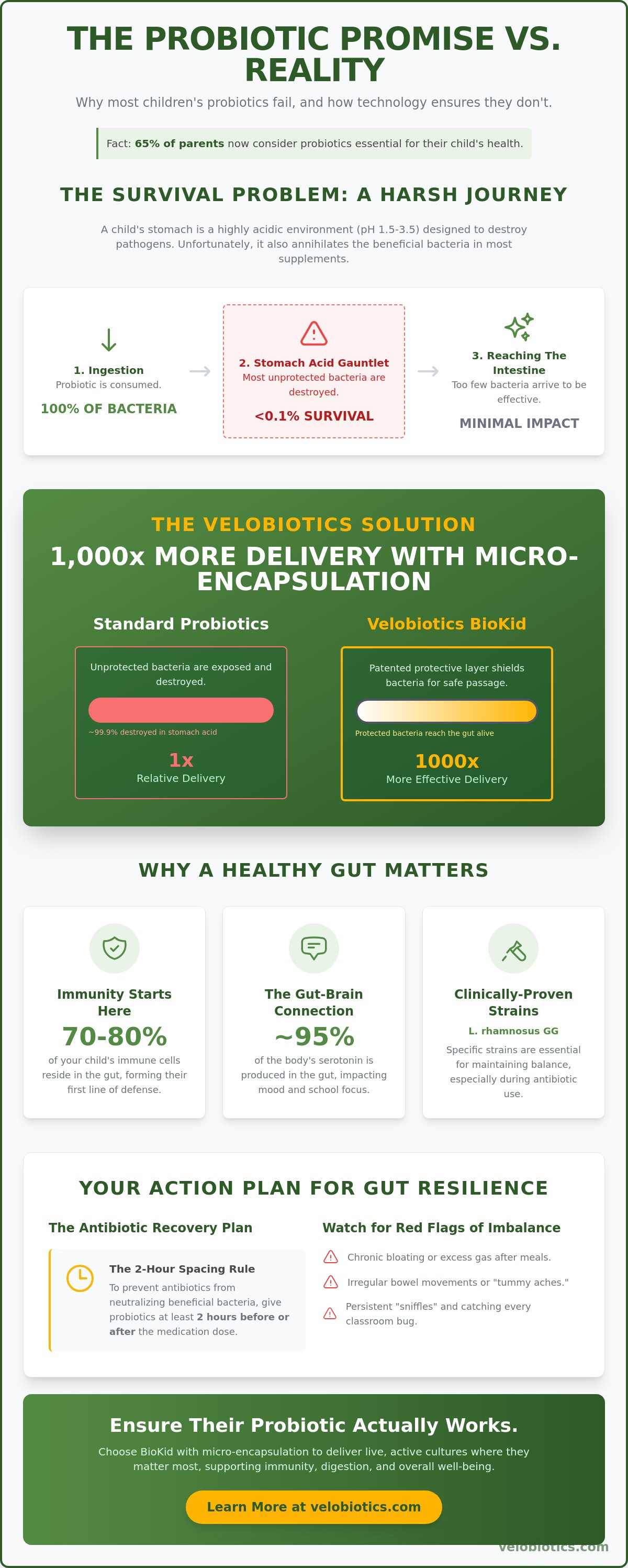
It surprises many parents to learn that 70% to 80% of their child’s immune cells reside directly in the intestinal lining. These cells are constantly communicating with the microbiome. Good bacteria act as a biological shield, physically blocking pathogens from attaching to the gut wall. A child’s gut is the primary classroom where their immune system learns to tell friend from foe. Scientific reviews on Probiotics in children highlight how specific strains can reduce the duration of common illnesses like gastroenteritis and support overall resilience.
The connection doesn't stop at immunity. The gut-brain axis is a two-way street; the gut produces about 95% of the body's serotonin. If the microbiome is out of balance, you might see it reflected in your child’s mood or their ability to focus during school hours. Watch for these red flags of an unbalanced ecosystem:
- Chronic bloating or excess gas after meals.
- Irregular bowel movements or frequent "tummy aches."
- Persistent "sniffles" and a susceptibility to every bug going around the classroom.
To support this delicate balance, I formulated BioKid Chewable Probiotics to provide the high-quality strains needed for pediatric resilience. By addressing these issues early, we help children maintain the energy and focus they need to thrive.
The Survival Problem: Why Most Children’s Probiotics Never Reach the Gut
The human stomach is a brutal environment by design. Its primary job is to act as a biological incinerator, using gastric acid with a pH between 1.5 and 3.5 to dissolve food and kill harmful pathogens. Unfortunately, this acid doesn't discriminate between "bad" germs and the beneficial probiotics kids need for health. When your child swallows a standard gummy or powder, those delicate bacteria hit a vat of acid that is literally strong enough to dissolve metal. Most of those "good guys" are annihilated within minutes, long before they can reach the small intestine where they are actually needed.
This biological reality creates what I call the Probiotic Gap. It's the massive discrepancy between the impressive numbers printed on the supplement bottle and the actual number of live bacteria that colonize the gut. If a label claims 10 billion CFU but 99% of them perish in the stomach, your child only receives a fraction of the intended benefit. When you examine what research says about probiotics, the focus is always on the clinical benefits of live cultures. However, the industry rarely addresses the logistics of how to get those cultures past the stomach's defenses alive. This is why many parents don't see the results they expect even after weeks of consistent dosing.
The Science of Micro-encapsulation
Think of a probiotic bacterium as a paratrooper. In a standard, unprotected supplement, that paratrooper is jumping out of the plane without a parachute into a sea of fire. It simply doesn't stand a chance. Our patented Velobiotics™ technology serves as the parachute. We use a sophisticated micro-encapsulation process that wraps each bacterium in a protective shield. This shield remains intact throughout the acidic journey in the stomach and only dissolves when it reaches the alkaline environment of the gut. This clinical-grade reliability ensures 1,000x more delivery than non-protected brands, turning a "maybe" into a scientific certainty.
CFU Counts: The Great Marketing Myth
Many parents fall for the "CFU arms race," assuming that a 50 billion count is automatically superior to a 5 billion count. This is a marketing myth. A 50 billion CFU product that is unprotected might result in near-zero delivery to the lower intestine. Conversely, a protected 1 billion CFU dose is significantly more effective because those bacteria actually reach their destination alive and ready to work. When you're shopping, stop looking for the biggest number. Instead, look for delivery technology markers and ensure the count is guaranteed at the "time of expiration" rather than just "time of manufacture." If you're looking for a science-backed solution that prioritizes survival, you might find the BioKid delivery system a much more reliable choice for your family's daily routine.
Strains, CFUs, and Formats: Decoding the Supplement Label
Deciphering a supplement label shouldn't require a medical degree, yet the industry makes it unnecessarily complex. Beyond the survival problem we discussed, the actual composition of the formula determines how well it supports your child's vitality. I always advocate for a "diverse garden" effect. A single-strain product is rarely enough to train a complex immune system. You want a multi-strain blend that mimics the natural diversity of a healthy human microbiome. This variety ensures that different areas of the digestive tract receive the specific support they need to flourish.
The Top 3 Strains Every Parent Should Know
While there are hundreds of microbial species, three stand out for pediatric health. Bifidobacterium infantis is the pioneer strain. It's specifically adapted to break down the complex sugars in breastmilk and is often the first major colonizer in a baby's gut. Lactobacillus acidophilus is the workhorse for general digestion. It helps maintain the acidic environment needed to ward off pathogens and reduces common issues like bloating. Finally, Saccharomyces boulardii is a unique, beneficial yeast. It's the "emergency" probiotic I recommend for acute stomach upsets. If your child is on a course of medication, look specifically for L. rhamnosus GG. Research shows this specific strain is highly effective at reducing the risk of antibiotic-associated diarrhea.
Format Comparison: Drops vs. Chewables vs. Gummies
The delivery format is just as important as the strains inside. For infants and toddlers, drops are incredibly practical because you can mix them into formula or breastmilk without a struggle. However, as children grow, many parents fall into the "Gummy Trap." While gummies account for over 40% of pediatric probiotic sales, they are often a poor choice for clinical efficacy. Gummies frequently contain high levels of sugar and artificial binders. Sugar is a fuel source for the very pathogenic bacteria we want to eliminate. Additionally, the manufacturing process for gummies involves heat, which can compromise the CFU count before the bottle is even opened.
Chewable tablets remain the doctor's choice for potency and stability. They allow for a more complex multi-strain profile without the sugar load of a gummy. I designed BioKid Chewable Probiotics as the gold standard for children's health. It provides 12 clinically-validated strains, ensuring that probiotics kids take actually contribute to a robust, diverse internal ecosystem. By choosing a chewable over a gummy, you're prioritizing long-term microbiome resilience over a temporary sweet treat.
The Antibiotic Recovery Plan and Daily Gut Habits for Picky Eaters
When a physician prescribes antibiotics, they're essentially calling in a tactical strike. These medications are life-saving tools, but they function like a controlled burn in a forest; they eliminate the infection while incinerating the beneficial flora in the process. To prevent antibiotic-associated diarrhea, which affects roughly 25% of children during a course of treatment, you need a precise recovery strategy. This isn't just about taking a pill. It's about a methodical approach to replanting the "seeds" of health while the medication is still in the system.
First, start your probiotics kids regimen the same day as the first antibiotic dose. You must space the two apart by at least 2 hours. If you administer them simultaneously, the antibiotic will simply neutralize the beneficial bacteria before they can colonize. Second, continue the supplement for at least 14 days after the final dose of antibiotics. This extended window allows the microbiome to reach a state of equilibrium. Third, provide prebiotic "fertilizer" like bananas, oats, and apples. Finally, strictly limit processed sugars for these two weeks. Sugar serves as a primary fuel source for the pathogenic "weeds" trying to seize control of the vacant space in the gut.
Winning the Picky Eater Battle
Don't fight the battle at the dinner table. If your child refuses tablets, you can easily crush a supplement and hide it in cold foods like smoothies, yogurt, or applesauce. I've seen this work for the most stubborn eaters in my clinical practice. However, you must follow the temperature rule. Never mix live cultures into hot oatmeal or warm milk. High heat kills bacteria instantly, rendering the supplement useless. To make this process easier, I recommend using BioKid Chewable Probiotics, which can be easily incorporated into a child's favorite cold snack while maintaining its potency.
Beyond the Pill: Lifestyle Habits for a Healthy Gut
Microbes love a routine. Beyond supplementation, I often "prescribe" dirt therapy. Let your kids play outside. Exposure to soil microbes helps train their immune cells to distinguish between harmless environmental factors and genuine threats. Hydration is also vital. Water ensures that fiber moves efficiently through the digestive tract, preventing the stagnation that can stall microbiome growth. Lastly, don't overlook sleep. Research shows the microbiome has its own circadian rhythm. A consistent bedtime acts as a nightly reset button for their internal garden, ensuring they wake up with the vitality needed for the 2026 school year.
Protect your child's gut during their next prescription by using BioKid’s micro-encapsulated formula to ensure 1000x more delivery of live, active cultures.
Why BioKid is My Prescription for Microbiome Resilience
As a physician and a founder, I didn't create Velobiotics to simply add another bottle to an already crowded pharmacy shelf. I built it because I was tired of seeing parents invest in supplements that offered no clinical guarantee of survival. The mission was clear: bridge the gap between high-level laboratory breakthroughs and the family lunchbox. When choosing probiotics kids actually benefit from, you need a formula that respects the complexity of the pediatric microbiome while utilizing the same rigorous delivery technology we use for adult clinical applications.
BioKid isn't a watered-down version of a mature supplement. It's a precisely engineered tool for growth. While the global children's probiotic market is projected to reach $2.37 billion by 2032, much of that growth is driven by products that prioritize flavor and "gummy" textures over actual biological function. We took a different path. By combining 12 probiotic strains with a prebiotic fiber, we created a synbiotic environment that supports the 15-20% of children worldwide who experience regular digestive challenges. This ensures that the bacteria don't just arrive; they stay and colonize.
The Velobiotics Difference
Our medical roots define every decision we make in the lab. You can read more about the Velobiotics Story to see how our patented technology moved from a clinical concept to a household essential. We've stripped away the junk fillers and artificial colors that plague the traditional supplement market. Your child deserves a probiotic that actually shows up for work, not one that's effectively neutralized before it leaves the stomach's acidic environment. Our micro-encapsulation ensures that the bacteria reach the gut alive, providing the protection and vitality your child needs for long-term health.
Ready to Support Your Little One?
Choosing a supplement is a significant act of trust. BioKid offers that peace of mind by guaranteeing potency through the date of expiration, not just the date of manufacture. It's a practical, daily habit that builds microbiome resilience, especially during the demanding school season. Here is a summary of the BioKid advantage:
- 12 clinically-validated strains to promote a diverse "gut garden."
- Patented technology that ensures 1000x more delivery than non-protected brands.
- A synbiotic formulation that includes prebiotics to feed the "good guys."
- A sugar-free, chewable format that avoids the "Gummy Trap" of low potency.
If you're ready to move past the marketing myths and invest in a delivery system that works 1000x harder than standard brands, you can Shop BioKid Chewable Probiotics today. Let's stop guessing about gut health and start using science to protect our children's future. I'm confident that once you see the difference a "delivered alive" probiotic makes, you won't look back.
Empower Your Child's Gut Health Today
We've moved past the marketing myths of high CFU counts to focus on what truly matters: survival. You now understand that the gastric acid barrier is the primary obstacle for probiotics kids need for immunity and regular bowel movements. By choosing a delivery system that protects these delicate microbes, you're ensuring they actually reach the small intestine alive and ready to colonize. Whether you're managing an antibiotic recovery plan or simply looking to support a picky eater, the science is clear. Clinical-grade protection is the only way to bridge the probiotic gap.
As a doctor-founder, I'm proud to offer our patented Velobiotics™ technology, which is clinically driven to ensure 1000x more bacteria reach the gut alive compared to standard brands. It's time to stop guessing and start using a solution built for resilience. Give your child the gift of 1000x better gut delivery and shop BioKid now! Your child's internal garden is ready to flourish with the right support.
Frequently Asked Questions
Can my child take probiotics every day?
Yes, your child can take probiotics every day. Consistency is the primary driver of microbiome stability; it's much like watering a garden. Daily supplementation ensures a steady influx of beneficial bacteria to counter the 15% of children who encounter daily digestive disruptions. While occasional use helps during acute issues, a daily routine builds long-term immune resilience for the upcoming school season.
What happens if a child takes too many probiotics?
If a child consumes an excessive amount, they might experience temporary gas, bloating, or mild diarrhea. Probiotics are generally safe because the body naturally sheds excess bacteria. However, it's best to stick to the dosage on the label. In my clinical experience, these symptoms usually resolve within 24 hours without medical intervention. Always store bottles out of reach to prevent accidental overconsumption.
Do kids probiotics need to be refrigerated?
Not all probiotics kids use require refrigeration. While older technologies relied on cold storage to keep bacteria dormant, our micro-encapsulation process protects the cultures at room temperature. This makes them much more practical for travel or school lunchboxes. Always check the label; if it doesn't specify refrigeration, the manufacturer has likely used a shelf-stable delivery method or advanced stabilization process.
Can probiotics help with my child’s eczema or skin issues?
Yes, research into the gut-skin axis suggests that a balanced microbiome can reduce the severity of eczema. Studies from 2024 indicate that specific strains, like Lactobacillus rhamnosus, help modulate the immune response that triggers skin inflammation. By improving gut barrier function, we reduce the systemic leakiness that often manifests as dry, itchy patches on a child's elbows or knees.
Is it better to get probiotics from food or supplements for kids?
It's best to use a combination of both for optimal health. Fermented foods like yogurt and kefir provide a broad spectrum of bacteria, but they often lack the strain-specific precision found in clinical supplements. Most food-based bacteria also struggle to survive the 1.5 pH environment of the stomach. Supplements using delivery technology ensure that specific, therapeutic doses actually reach the gut alive to perform their function.
Can I give my toddler the same probiotic I take?
No, you should avoid giving adult-strength probiotics kids under the age of five. Toddlers have a developing microbiome that requires specific strains like B. infantis, which are less prevalent in adult formulas. Additionally, adult doses can be too concentrated for a small child's digestive system, potentially causing unnecessary bloating. Stick to pediatric-specific formulations designed for their unique biological needs.

Disclaimer
Information and statements regarding dietary supplements/products have not been evaluated by the Food and Drug Administration, MCC/SAHPRA, MHRA, TGA or any other drug regulatory authority and are not intended to diagnose, treat, cure, or prevent any disease. Information on this website is provided for informational purposes only and is a result of years of practice and experience by the author. This information is not intended as a substitute for the advice provided by your physician or other healthcare professional or any information contained on or in any product label or packaging. Do not use the information on this website for diagnosing or treating a health problem or disease, or prescribing medication or other treatment. Always speak with your physician or other healthcare professional before taking any medication or nutritional, herbal, or homeopathic supplement, or using any treatment for a health problem. If you have or suspect that you have a medical problem, contact your healthcare provider promptly. Do not disregard professional medical advice or delay in seeking professional advice because of something you have read on this website.