

Vaginal Odor After Period: A Doctor’s Guide to Your Post-Menstrual pH Reset
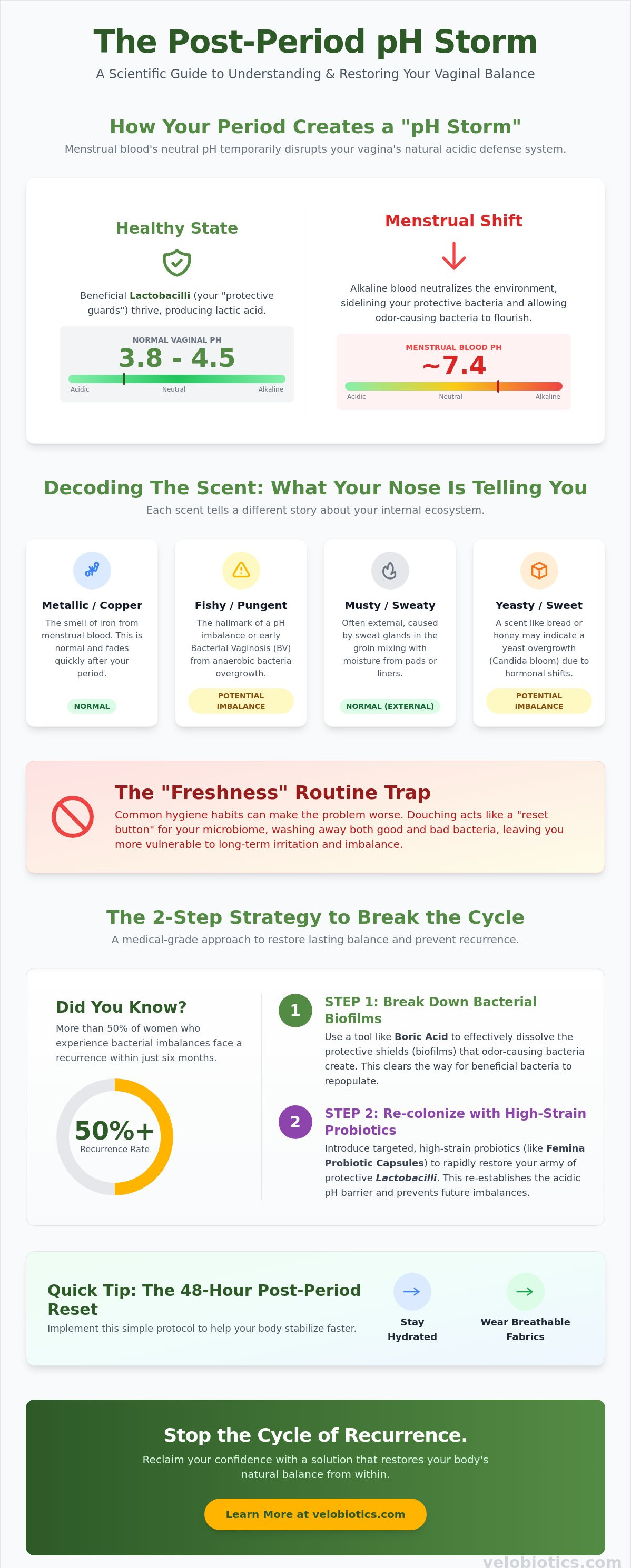
Your period is essentially a monthly "pH storm" that temporarily sidelines your body's most powerful defense system. While you might feel like you need more soap or a stronger fragrance, the reality is that vaginal odor after period isn't a sign of poor hygiene; it's a biological SOS. Blood has a neutral pH of approximately 7.4, which is significantly higher than the acidic 4.5 environment your protective bacteria require to thrive. This sudden shift creates a window of opportunity for unwanted bacteria to flourish while your beneficial lactobacilli are left struggling to survive.
It's completely normal to feel self-conscious or frustrated when products only mask the issue, especially since more than 50% of women who experience bacterial imbalances face a recurrence within just six months. I'm going to show you exactly why your scent changes and provide a medical-grade protocol to restore your internal balance. We'll dive into the science of re-colonization and how to use targeted tools like boric acid and high-strain probiotics to stop the cycle of recurrence and reclaim your confidence.
Key Takeaways
- Understand how the alkaline nature of menstrual blood creates a "pH storm" that temporarily sidelines your body's natural defenses.
- Identify the specific differences between standard metallic scents and the fishy indicators of vaginal odor after period that suggest a bacterial shift.
- Implement a strategic 48-hour reset protocol using hydration and breathable fabrics to help your internal environment stabilize after your cycle ends.
- Learn why common hygiene habits like douching act as a "trap" that actually increases your risk of long-term irritation and imbalance.
- Discover the medical-grade strategy of breaking down bacterial biofilms with boric acid before re-colonizing the area with high-strain probiotics.
The Science of the Post-Period Funk: Why Your pH Shifts
Imagine your vaginal environment as a high-security vault. To keep it secure, it needs to stay remarkably acidic, specifically between a pH of 3.8 and 4.5. This acidity isn't an accident; it's your body's primary defense mechanism against unwanted pathogens. Then your period arrives. Menstrual blood has a pH of approximately 7.4, which is significantly more alkaline than your natural state. In the world of biology, this is a massive shift. It's essentially a "pH storm" that rolls in every month, neutralizing the protective acids and creating a window of opportunity for "smelly" bacteria to bloom.
Your primary defense relies on a group of beneficial bacteria known as Lactobacilli. Think of these as your internal security guards. They live within the vaginal microbiome and constantly churn out lactic acid to maintain that protective 4.5 barrier. When blood floods the system, these guards get sidelined. They simply can't function in an alkaline environment. This temporary vacancy in leadership is exactly why you might notice a distinct vaginal odor after period. Without the guards on duty, anaerobic bacteria take over, and they are much louder, and smellier, than the peaceful Lactobacilli they replaced.
The Blood Factor: Alkalinity and Bacteria
Fresh menstrual blood usually has a faint, metallic scent due to its iron content, but "old blood" at the end of your cycle is a different story. As blood flow slows down, it lingers in the vaginal canal longer, giving it more time to oxidize and interact with your natural flora. The proteins in blood act like a five-star buffet for anaerobic bacteria. If your period lasts five to seven days, that is a long enough window for a complete bacterial shift. By the time your flow stops, the "bad" bacteria have often established a foothold, leading to that lingering scent that feels impossible to wash away.
Hormones and Moisture: The Perfect Storm
Your hormones also play a frustrating role in this transition. Right before and during your period, estrogen levels plumment. This drop causes the vaginal lining to thin and reduces the production of glycogen. This is a major problem because glycogen is the "fuel" that Lactobacilli eat to stay strong. No fuel means no protection. When you combine this lack of fuel with the increased moisture and heat trapped by pads or tampons, you've created the perfect incubator for an imbalance. To help your "security guards" get back on their feet after this hormonal dip, many women find that supplementing with Femina Probiotic Capsules provides the specific strains needed to re-colonize the territory quickly.
Decoding the Scent: Metallic, Fishy, or Just 'Off'?
Not all scents are created equal. When you notice a vaginal odor after period, your first instinct might be to worry, but your nose is actually a sophisticated diagnostic tool. Understanding the nuances of these aromas can help you distinguish between a standard biological process and a shift that requires clinical attention. Most women describe their post-period scent in one of four ways: metallic, fishy, musty, or yeasty. Each one tells a specific story about what is happening in your internal ecosystem.
- Metallic or Copper: This is the most common post-period scent. It is simply the smell of iron from your menstrual blood. Since blood stayed in the vaginal canal during your cycle, this scent is a normal part of the shedding process and usually fades quickly.
- Fishy or Pungent: This sharp aroma is the hallmark of a pH imbalance or early Bacterial Vaginosis (BV). It occurs when the "pH storm" we discussed earlier allows anaerobic bacteria to overproduce volatile organic compounds called amines.
- Musty or Sweaty: This often has nothing to do with your vagina. The groin is home to apocrine sweat glands. When these mix with the extra moisture from pads or liners, it can create a heavy, musky scent that sits on the skin.
- Yeasty or Sweet: If you notice a scent reminiscent of bread or honey, it might indicate a yeast overgrowth. The hormonal shifts at the end of your cycle can sometimes trigger a Candida bloom.
When Normal Becomes 'Not Normal'
Distinguishing between skin-level sweat and internal discharge is the first step in self-diagnosis. I often recommend the "sniff test" to my patients: check your discharge specifically. If the scent is localized to your underwear or skin, it's likely external. However, if the scent is tied to a change in discharge consistency, such as a thin, grayish-white fluid, your internal flora is likely struggling. An abnormal odor is defined as a scent that persists for more than three days after your period has completely ended.
The 'I Can Smell Myself Through My Pants' Anxiety
I see this specific fear echoed constantly in Reddit threads where women describe feeling like everyone in the room can smell them. Let me reassure you: the "scent bubble" is largely a myth. Your nose is only about two feet away from your lap, while everyone else is significantly further away. You are hyper-aware of your own aroma in a way that others simply aren't. However, if you are dealing with a clinical shift like Gardnerella, the scent can become more pronounced after intimacy or when using alkaline soaps. For a quick reset that addresses both odor and bacterial balance, Femina Probiotic COOKIE FRESH Suppositories can be an effective tool to regain your confidence and peace of mind.
The 48-Hour Post-Period Reset Protocol
Once the "pH storm" begins to subside, your body needs a structured recovery plan. You don't have to wait weeks for your system to figure it out on its own. I've developed a clinical 48-hour reset protocol that addresses the root cause of vaginal odor after period by focusing on both environmental and biological factors. This isn't about masking a scent; it's about restoring the functional superiority of your natural defenses.
- Step 1: Hydrate aggressively. Your vaginal mucosa depends on systemic hydration to produce the healthy, acidic discharge that naturally cleanses the canal. Aim for at least 3 liters of water daily during this window.
- Step 2: Prioritize airflow. Switch to 100% cotton, breathable fabrics for at least 48 hours. Synthetic lace and tight leggings trap heat and moisture, creating a greenhouse effect for anaerobic bacteria.
- Step 3: Use a pH-balancing suppository. A targeted application of boric acid acts as a "reset button." It gently lowers the pH back to the 4.5 safety zone, making the environment inhospitable for the bacteria that cause vaginal odor after period.
- Step 4: Re-seed the microbiome. Once the alkaline residue is neutralized, you must introduce "new settlers." Use targeted vaginal probiotics to ensure the right strains of Lactobacilli take up residence before "bad" bacteria can return.
Internal vs. External Care
There is a massive difference between cleaning your skin and maintaining your internal ecosystem. The Cleveland Clinic explains the causes of vaginal odor often include hormonal shifts and the presence of blood, which soaps cannot fix. Wash your vulva with plain, lukewarm water only. Skip the "intimate soaps" and feminine washes. These products are almost always too alkaline, which actually helps the "bad" bacteria thrive while killing off your protective flora.
Dietary Tweaks for Vaginal Freshness
What you eat during your cycle directly impacts your post-period recovery. High sugar intake fuels yeast and anaerobic bacteria, giving them a head start in the race to colonize your microbiome. While eating yogurt or kimchi is helpful, the clinical reality is that the bacteria in food often don't survive the journey through your digestive tract in high enough numbers. For a more reliable approach, I recommend using Femina Probiotic Capsules. These provide systemic support with specific strains designed to survive the gut and migrate to the vaginal tract, ensuring your "security guards" are always at full strength.
Why Your 'Freshness' Routine Might Be Making It Worse
When you encounter vaginal odor after period, the most common reaction is to reach for more soap. It's a logical human response, but biologically, it's a disaster. I often tell my patients that douching is like trying to clean a self-cleaning oven with a bottle of bleach. The vagina is a dynamic, self-regulating organ. By forcing liquids or soaps inside, you aren't just "cleaning"; you're physically flushing out the very Lactobacilli that keep you healthy. This creates a rebound effect where the bad bacteria return faster and stronger because their competitors have been evicted.
Scented pads, tampons, and "feminine wipes" are equally problematic. These products are often loaded with chemical fragrances and alcohol that irritate the delicate mucosal lining. When your body detects these irritants, it produces more discharge as a defensive measure to flush them out. This creates a frustrating cycle: you feel "less fresh," use more scented products, and your body responds with even more discharge and odor. You can't solve a biological imbalance with perfume-soaked pH disruptors. Over-washing the external vulva with harsh soaps is just as damaging. It strips away the natural sebum and oils that protect your skin, leading to micro-tears and chronic irritation that can actually mimic the symptoms of an infection.
The Myth of the 'Scentless' Vagina
Marketing campaigns have spent decades convincing women they should smell like a bouquet of flowers. This is a scientific lie. A healthy, balanced microbiome should have a slightly tangy or sour scent, similar to yogurt or sourdough. This is the physical evidence of lactic acid production. When you try to eliminate this natural biological marker, you're actually fighting against your own health. Embracing your natural scent means understanding that "clean" doesn't mean "fragrant." If you are managing vaginal odor after period, the goal is balance, not total elimination of your biology.
Panty Liners: The Hidden Culprit
If you wear panty liners daily to manage post-period discharge, you might be feeding the problem. Most liners have a plastic backing that prevents airflow, creating a literal "greenhouse effect" against your skin. This traps heat and moisture, which is exactly what anaerobic bacteria need to thrive. I recommend giving your body some "air time," especially at night. Sleeping without underwear allows the area to breathe and helps distinguish between a true infection and simple contact dermatitis from product irritation. If you've been trapped in this over-washing cycle, you can break it by using Femina COOKIE FRESH Boric Acid ONLY Suppositories to reset your pH without the harsh chemicals found in drugstore wipes.
Restoring the Balance: Probiotics and Boric Acid
Effectively clearing vaginal odor after period requires a two-step clinical approach: eviction and re-colonization. First, we use boric acid as a "reset button." Its primary function isn't just lowering pH; it's breaking down biofilms. Biofilms are protective, slimy shields that "bad" bacteria build to hide from your immune system. Without breaking these shields, any relief you find will be temporary. Once the boric acid has dismantled these defenses and neutralized the alkaline blood residue, the environment is ready for the "new settlers," which are the beneficial probiotics your body craves.
Many women try to solve this issue with oral probiotics, but there's a significant biological hurdle. Your stomach is an incredibly hostile environment with a pH of 1 or 2. Most standard probiotic capsules dissolve in the stomach, and the delicate bacteria are killed by gastric acid before they ever reach the intestinal tract, let alone the vaginal microbiome. This is why direct, localized delivery is the gold standard for immediate and effective relief. By placing the treatment exactly where it's needed, we bypass the digestive "kill zone" entirely and ensure the active ingredients reach their target with maximum potency.
The Science of Micro-Encapsulation
In my research, I realized that viability is the only metric that truly matters. If the bacteria aren't alive when they reach their destination, the supplement is functionally useless. Our proprietary micro-encapsulation technology acts like a protective suit for each individual microbe. This shield protects the delicate strains from moisture, heat, and environmental stressors that typically kill off standard market offerings. You can read more about the clinical development of this technology in the Velobiotics Story. This high-tech approach ensures that the bacteria remain viable and ready to work once they are applied to your internal ecosystem.
How to Use Suppositories for Best Results
Practical application is key to success. The best time to use a suppository is right before bed. This allows the product to dissolve and distribute evenly while you're lying down, preventing gravity from causing it to leak out too quickly. You should expect what I call "the purge." This is a thin, watery discharge that occurs as the boric acid does its work. Don't be alarmed; it's a physical sign that the alkaline residue and broken-down biofilms are leaving your system. For a comprehensive post-menstrual reset, Femina Cookie Fresh provides the dual action of boric acid and micro-encapsulated probiotics in one step, ensuring you address vaginal odor after period while simultaneously re-seeding your protective flora.
Take Control of Your Post-Period Reset
Your monthly cycle shouldn't leave you feeling sidelined by your own biology. We have explored how the shift from an acidic to an alkaline environment creates a temporary window for unwanted bacteria to flourish, but you now have the medical-grade tools to fight back. By avoiding the common douching traps and focusing on a 48-hour protocol of hydration and breathable fabrics, you're already miles ahead of the standard hygiene routine.
To truly eliminate vaginal odor after period, you need a strategy that addresses the root cause: bacterial biofilms. My doctor-founded formulation uses a sophisticated dual-action approach to dismantle those hidden bacterial shields with boric acid while simultaneously introducing micro-encapsulated probiotics. This specific technology ensures maximum viability, meaning the beneficial bacteria actually survive to re-colonize your microbiome. You don't have to guess about your health when you use science-backed delivery systems designed for your unique physiology.
Ready to feel 'Cookie Fresh' again? Grab your post-period reset kit here!
You deserve to move through every phase of your cycle with absolute confidence. Your body is a brilliant, self-regulating system, and with the right clinical support, it's more than capable of maintaining its perfect balance.
Frequently Asked Questions
Is it normal to have a strong odor right after my period?
Yes, a mild shift in scent is biologically expected due to the alkaline nature of menstrual blood neutralizing your natural acidity. However, a strong or foul aroma usually indicates that this "pH storm" has allowed anaerobic bacteria to overgrow. While a metallic scent is normal, a pungent or fishy odor suggests your protective Lactobacilli have been sidelined and need assistance to regain control of the environment.
Can I use boric acid suppositories every month after my period?
You can safely use boric acid suppositories as a monthly reset tool if you are prone to cycle-related imbalances. Many women find that a single application on the final day of their flow effectively neutralizes lingering blood residue. This proactive approach prevents the formation of biofilms and helps stabilize the pH before a full-blown infection can take root, making it a practical part of a long-term maintenance routine.
How do I tell the difference between period smell and BV?
The primary differentiator is the quality and duration of the scent. A normal period smell is typically metallic or musky and dissipates within 24 to 48 hours after bleeding stops. In contrast, Bacterial Vaginosis (BV) produces a sharp, fishy odor that often intensifies after intimacy or when using alkaline soaps. If the scent persists beyond the three-day mark, it's likely a clinical imbalance rather than a simple cycle shift.
Why does my period blood smell like onions or skunk?
This specific scent usually results from the interaction between sweat from your apocrine glands and the bacteria on your skin. When these glands, located in the groin area, produce moisture that gets trapped by pads or liners, it can create a sulfur-like or "skunky" aroma. It's often an external hygiene issue rather than an internal infection. Switching to breathable cotton fabrics and using plain water for external cleansing can usually resolve this quickly.
Can I use probiotics while I am still bleeding?
You can use oral probiotics while bleeding, but I recommend waiting until your flow is very light or finished before using vaginal suppositories. Heavy menstrual flow can physically wash the probiotic strains out of the canal before they have a chance to colonize the mucosal lining. For maximum biological viability, apply your suppositories at night once your period has tapered off to ensure the beneficial bacteria can settle effectively.
How long does it take for vaginal odor to go away after a period?
A standard cycle-related scent should naturally resolve within two to three days as your body produces lactic acid to lower the pH. If you use a medical-grade reset protocol, you can often see a significant improvement in vaginal odor after period within 24 hours. If the scent remains unchanged after 72 hours of targeted care, your microbiome likely needs a more intensive clinical intervention to restore the necessary balance.
Should I see a doctor if my odor doesn't go away after 3 days?
You should schedule an appointment if the odor persists past three days or is accompanied by itching, burning, or grayish discharge. While a post-period "funk" is common, persistent symptoms could indicate an underlying infection like trichomoniasis or a stubborn case of BV that requires prescription-strength treatment. Don't ignore these signals; your body uses scent as an early warning system for your internal health and biological viability.
Does what I eat affect my vaginal smell after my period?
Your diet plays a measurable role in your internal chemistry, especially regarding sugar and hydration. High sugar intake fuels the growth of yeast and certain "smelly" bacteria, while dehydration leads to more concentrated, pungent discharge. Consuming fermented foods and staying aggressively hydrated supports your body's ability to flush the system. For more consistent results, systemic support through targeted capsules helps bridge the gap between your daily diet and your specific vaginal health needs.

Disclaimer
Information and statements regarding dietary supplements/products have not been evaluated by the Food and Drug Administration, MCC/SAHPRA, MHRA, TGA or any other drug regulatory authority and are not intended to diagnose, treat, cure, or prevent any disease. Information on this website is provided for informational purposes only and is a result of years of practice and experience by the author. This information is not intended as a substitute for the advice provided by your physician or other healthcare professional or any information contained on or in any product label or packaging. Do not use the information on this website for diagnosing or treating a health problem or disease, or prescribing medication or other treatment. Always speak with your physician or other healthcare professional before taking any medication or nutritional, herbal, or homeopathic supplement, or using any treatment for a health problem. If you have or suspect that you have a medical problem, contact your healthcare provider promptly. Do not disregard professional medical advice or delay in seeking professional advice because of something you have read on this website.